

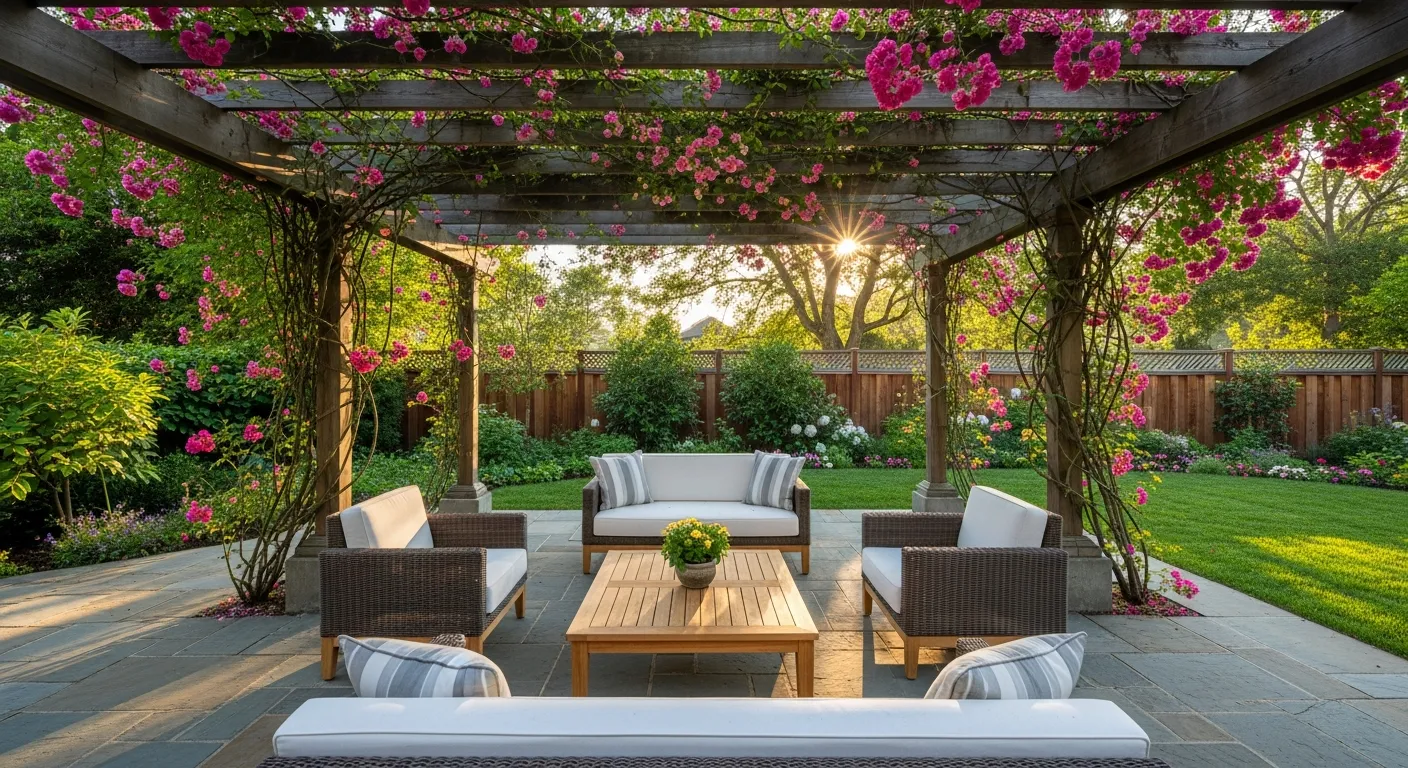
The most comforting spaces are the ones closest to home. Here’s where backyards hold untapped potential. Inspired by secret garden landscape design themes, this guide highlights the key steps to creating a garden oasis in the backyard.
Prepare the Space
Every successful garden begins with careful planning. Start by evaluating the available space, noting sunlight patterns, drainage, existing structures and privacy concerns.
Think about how movement will flow through the space. Pathways can guide circulation and naturally encourage exploration. Also consider how hedges, fences, trellises or plantings can help soften boundaries and create a more secluded atmosphere.
From there, divide the yard into purposeful zones, such as a lounging area and garden beds. A seating area may serve as a quiet retreat, while plants can introduce seasonal interest. Use pathways to connect these elements into a cohesive whole.
Layering the landscape from the beginning adds depth and rhythm, leading to a sense of discovery as hidden spaces unfold throughout the garden.
Choose the Right Plants
A garden comes to life by layering plants, pathways and seating areas to create a sense of relaxation within the space. When done well, the result is quietly restorative, offering health benefits beyond aesthetics. Research supports this, suggesting that mental health benefits can last up to seven hours after spending time in green spaces.
Select a combination of trees, shrubs, perennials, ornamental grasses and flowering plants to create visual layers and year-round interest. Focus on varying heights, textures and colors. Taller plants can serve as natural screens, while lower-growing varieties enliven pathways and seating areas.
In addition, fragrant blooms, climbing vines, and native species add sensory appeal and support local pollinators. Combining evergreen and seasonal plants also ensures the garden remains inviting throughout the year.
Set Up a Cozy Seating Area
Comfortable seating transforms a beautiful garden into a functional retreat. Choose benches, dining sets or lounge chairs that encourage relaxation and gathering. Stainless steel benches or aluminum outdoor sets are often excellent choices for outdoor environments. They combine durability and weather resistance, while offering a modern look that complements a wide range of garden styles.
When choosing metal furniture, it's important to learn about the material's unique characteristics. For example, Grade 304 stainless steel contains chromium and nickel, providing strong resistance to rust and everyday environmental exposure. It is generally suitable for patios, covered gardens and standard residential outdoor use. For environments with high humidity or exposure to salt air, Grade 316 is a better choice due to its higher corrosion resistance.
Position seating within garden layers, surrounded by greenery and shaded areas. Ensure seating spaces are distinct from the rest of the yard to maintain an intimate atmosphere. To complete the setting, introduce color and texture with soft furnishings such as outdoor cushions, throw pillows and weather-resistant textiles.
Create Visual Interest
Decorative lighting, water features and landscape structures can elevate a garden's atmosphere and create visual interest. Arbors and trellises, for example, define pathways and provide support for climbing plants while creating a strong focal point.
Modern fabrication techniques have expanded design possibilities for custom garden structures. Computer numerical control machining enables highly precise automated metal cutting, making it possible to create intricate designs for built-to-order decorative structures such as custom metal garden arbors. Homeowners can also combine these structures with climbing roses, jasmine or wisteria to generate a more secluded, enchanting feel of a garden oasis.
Caring for the Garden
Even a small garden needs consistent attention that supports plant health and overall garden vitality. Beyond initial planting and design, ongoing care helps maintain structure, encourages growth and prevents common issues from developing. The following tips highlight key practices to keep a garden healthy and inviting throughout the seasons:
- Water plants according to seasonal needs. Ensure deep, consistent watering during dry periods, but avoid overwatering, as it can lead to root issues.
- Regularly improve soil health by incorporating compost or organic fertilizers to replenish nutrients and support long-term plant growth.
- Monitor plants for early signs of pests or disease before they spread across the garden.
- Control weed growth through mulching, hand removal or ground cover planting to reduce competition for water and nutrients.
- Prune shrubs, trees and flowering plants to maintain shape and improve air circulation.
- Maintain seasonal upkeep such as deadheading spent blooms and clearing debris to keep the garden tidy and support continuous flowering.
Elevating Outdoor Living
A well-designed garden can become an extension of daily life, offering a safe retreat for rest and rejuvenation. With the right elements and personal touches, homeowners can transform ordinary backyards into enchanted gardens that inspire a deeper connection to nature. Whether they use the space for peaceful reflection or casual gatherings, a backyard garden is both a beautiful and beneficial investment.


