When you think about painting your home's interior, you may overlook the staircase. However, painting your staircase can enhance your interior's aesthetic with little effort. If you have a neutral-shade wall, a staircase in a bold shade can create a focal point. Similarly, choosing a staircase color that contrasts with or complements your wallpaper is also a great way to upgrade your interior. However, before painting your staircase, you must understand the required preparation process. This blog covers the preparation steps and the painting tips.
Understanding the Parts of a Staircase
When you paint a staircase, you need to know its parts to understand the process correctly.
Handrail: Also known as a balustrade or banister, this is the part you hold while you climb up or down the stairs.
Tread: The flat upper surface of each stair on which you step to climb or get down. It is the most-used area, so it needs a durable paint finish.
Riser: It is the front part of each stair that is visible when you see the staircase from the front. Adding a bold or vibrant shade here creates a focal point.
Nosing: This is the stair’s hanging section that takes the most bumps and knocks, so it should have a hard-wearing paint finish.
Spindles: These are the long, thin parts that connect the railing to the stair stringers. While modern homes may have metal spindles, many traditional home interiors have beautifully decorated wooden spindles.
Stringers: These are the bottom parts of the stairs on each side. Painting the stringers in the same shade as the wall offers a sense of continuity.
What Materials Are Required to Paint a Staircase?
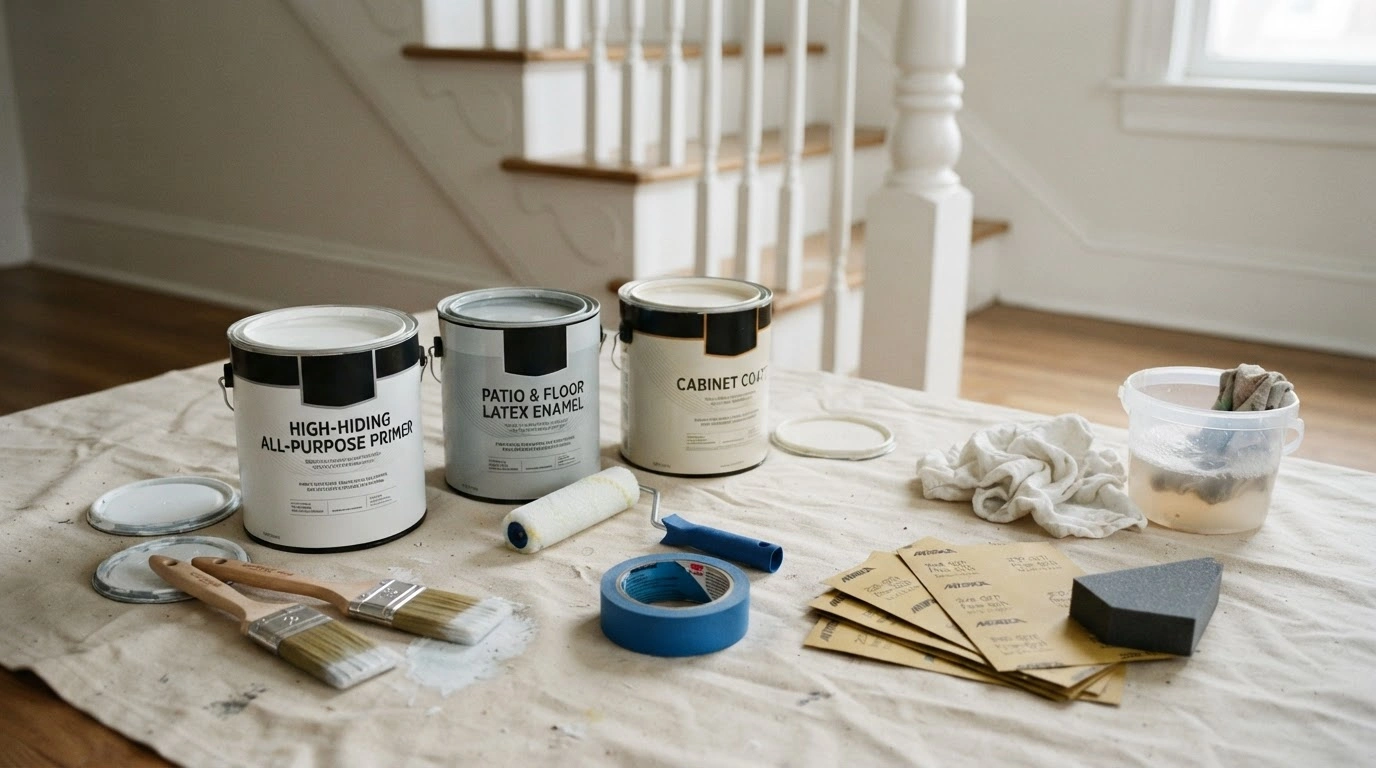
When you're ready to give your stairs a fresh look, start with preparation. Here is a list of materials you might need for painting.
- Paint for home interiors
- Damp cloth and drop cloth
- 220-grit fine-grit sandpaper
- Patio and floor latex enamel
- High-hiding all-purpose primer
- Cabinet coat
- 1-½ inch and 2-½ inch angle-sash brushes
- Painter’s tape
- 4-inch roller with cover
- Sanding sponge
- Vacuum
- Warm soapy water
How to Prep and Paint a Staircase?
Once youhave gathered all the materials, follow these steps to prep and paint a staircase.
Step 1: Clean the Stairs
First, use a vacuum cleaner to clear out dust and other debris from the stairs. Then, use warm soapy water and a damp cloth to clean the spindles, handrails, and other parts of the stairs. Let the staircase dry completely before moving to the next step.
Step 2: Prepare the Surface
Carefully keep the drop cloth around the stair’s bottom, then sand the wooden surfaces with sandpaper and a sanding sponge. Sanding is crucial to smooth the surface before applying paint. Once the sanding is done, clean up the dust using a vacuum cleaner. Finally, paste painter’s tape on the wall border along the staircase before starting the pre-paint task. This will prevent staining other surfaces.
Step 3: Apply Primer
Primer is the most important step before painting any surface, including a staircase. Use a High-Hiding, All-Purpose primer and apply an even layer, starting with the handrail. Start at the top of the staircase and work your way down, covering the entire staircase with primer. While you can use a large paintbrush for wider surfaces, smaller ones work well for finer areas. You can also use a roller on handrails and spindles. Once you're done, let the primer dry completely before you start painting.
Step 4: Paint the Staircase
Once the primer is dry and set, it is time to paint the staircase. Just like primer, start at the top of the staircase and work your way down, painting the entire staircase. You can use different brushes and rollers in the same way you did for the primer. You can use Interior paint for handles and spindles, but use latex enamel for other parts such as the risers, nosing, stringers, and treads.
Step 5: Finish the Paint
Let the paint dry after its first application. Then apply a second coat and let it dry. Once the paint is dry, remove the painter’s tape.
When Should You Not Paint a Staircase?
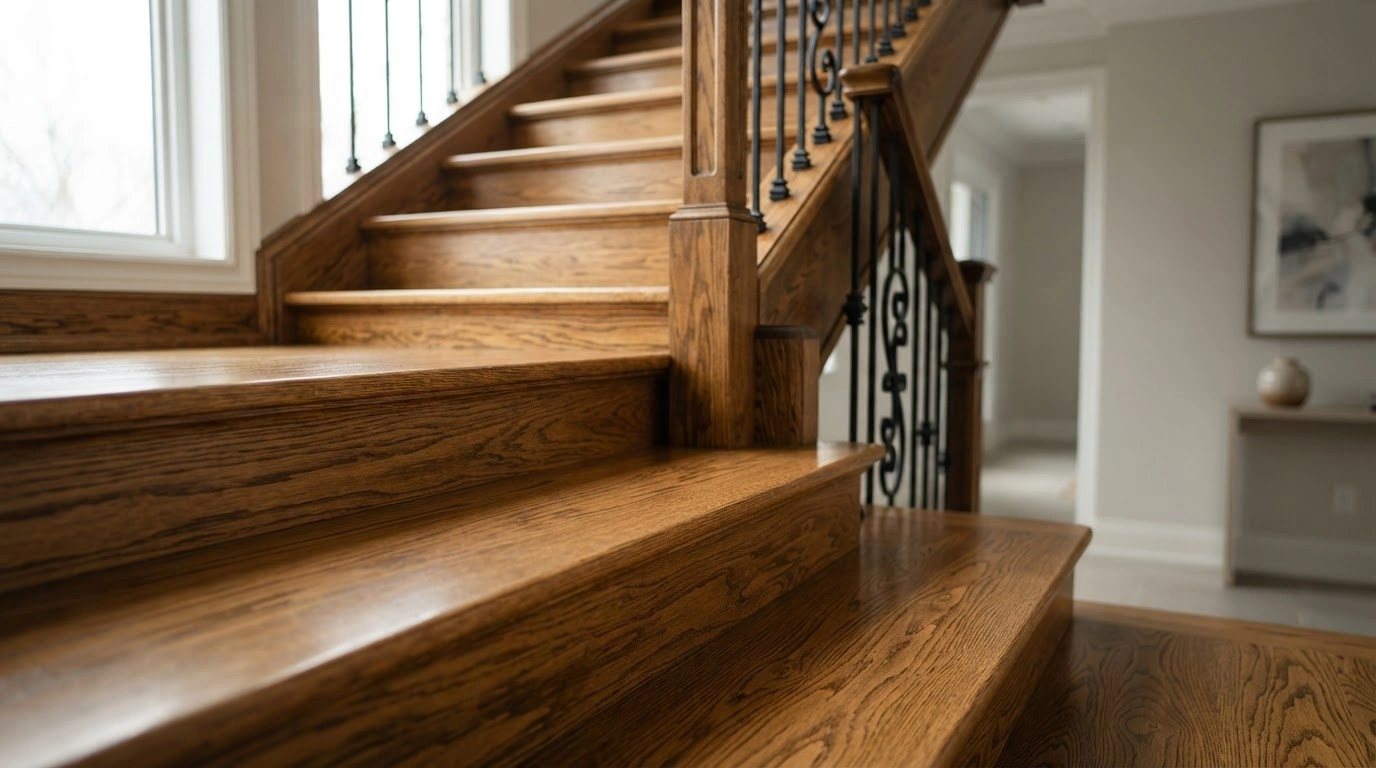
While painting a staircase can add new visuals to the interior, it's not always necessary. If you have hardwood stairs such as maple, cherry, or oak, it is better to stain them than paint them. Hardwood stairs have their own texture that you might like to retain. Also, painting hardwood may involve more time and cost more money. So, always check the final result and your budget before deciding to paint your staircase.
Conclusion
While some homeowners prefer to keep their staircase as is, others want a new look by painting it. However, when you decide to paint your staircase, there are some preparations that you must not miss. Cleaning the staircase and smoothing the surface are basic prep steps that help the paint adhere and make the staircase complement the interior wall.