

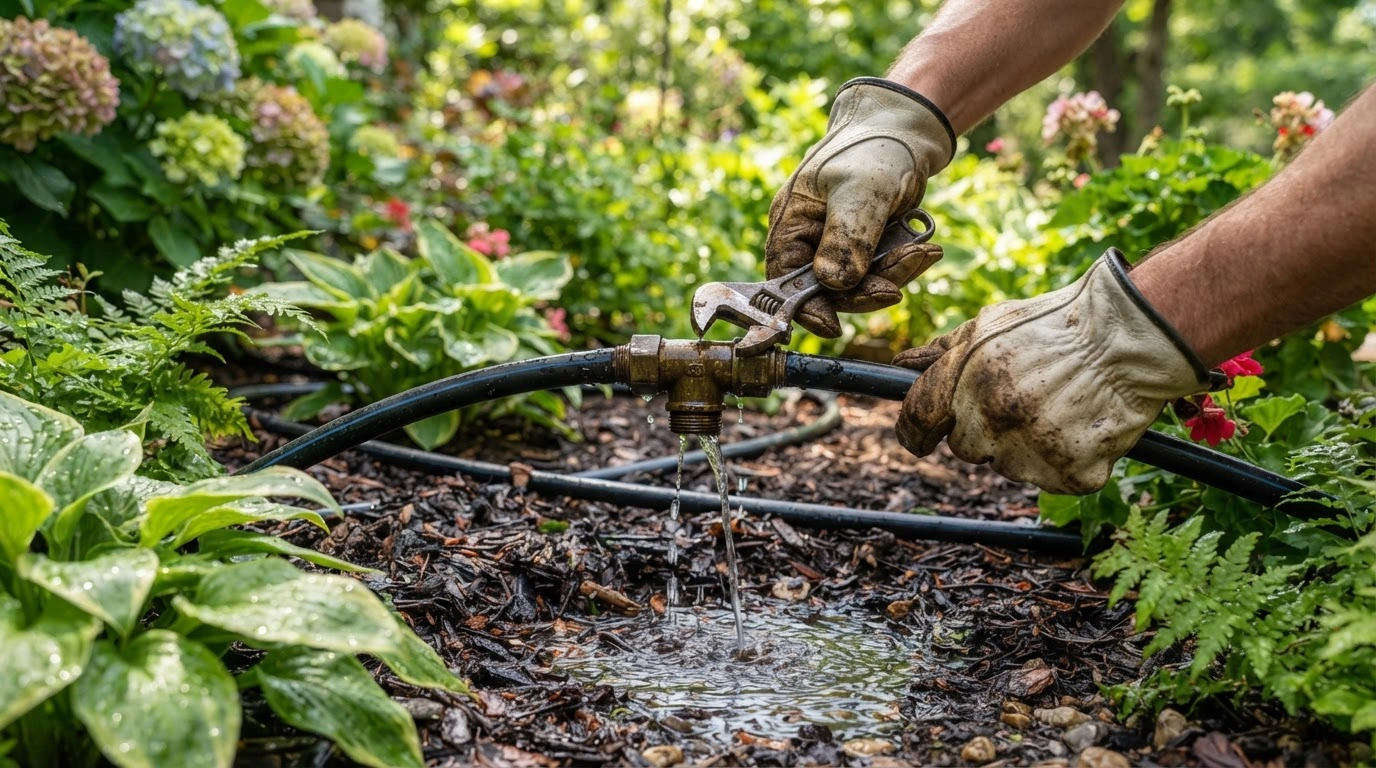
A garden irrigation system can save time, support healthier plants and reduce the effort required to maintain a lawn or landscape. However, even a small leak, damaged sprinkler head or poorly adjusted timer can waste a surprising amount of water.
Water waste is not always easy to notice. A leaking fitting may be hidden beneath plants, while overspray can slowly send water onto paths, fences or driveways every time the system runs. Regular inspections can help identify these problems before they increase water bills or damage the surrounding landscape.
Check for Leaking Connectors and Fittings
Connections are some of the most common leak points in a garden irrigation system. Threaded adapters, hose fittings, couplings, valves and pipe transitions can loosen or wear out over time.
Run the irrigation system and inspect each visible connection. Look for dripping water, wet soil, small sprays or mineral deposits around fittings. Constantly damp areas near a connection may indicate a slow leak, even when water is not visibly spraying.
Loose threaded connections may simply need to be tightened. However, avoid overtightening plastic components, as excessive force can crack them. Damaged washers, seals or fittings should be replaced rather than repeatedly tightened.
When replacing worn connectors, use components that match the pipe material, connection type and operating pressure. Plumbing repair fittings, valves and connection supplies are available from PlumbingSell for irrigation repairs and other outdoor plumbing projects.
Inspect Hoses and Irrigation Lines
Garden hoses, drip tubing and flexible irrigation lines can deteriorate due to sunlight, freezing temperatures, garden tools, foot traffic and normal ageing.
Inspect hoses for:
- Cracks or splits
- Bulging sections
- Pinholes
- Kinked areas
- Loose end fittings
- Damage caused by lawn equipment
Small leaks may sometimes be repaired with a suitable hose repair connector. Heavily worn hoses should usually be replaced, especially when several sections are damaged.
For underground irrigation lines, watch for unusually soft soil, puddles or patches of grass that are much greener than the surrounding area. These signs can indicate a buried pipe or tubing leak.
Correct Sprinkler Overspray
Overspray occurs when sprinklers water areas that do not need irrigation, such as pavements, walls, driveways or neighbouring properties. This problem wastes water and may also create slippery surfaces or cause staining.
Observe the system while it is running rather than relying only on the sprinkler layout. Wind, plant growth and shifted sprinkler bodies can change where the water lands.
Adjust the direction and spray pattern of each sprinkler head. Many heads allow the spray arc, radius or flow to be modified. Make sure water reaches the intended planting area without repeatedly soaking hard surfaces.
Sprinklers should also be positioned so that neighbouring spray patterns overlap enough to provide even coverage. Poor coverage can cause users to increase watering times unnecessarily, leading to waste in other parts of the garden.
Replace Broken or Blocked Sprinkler Heads
A damaged sprinkler head may spray water unevenly, fail to rise, remain stuck above the ground or release a large stream of water around its base.
Common problems include:
- Cracked sprinkler bodies
- Missing or damaged nozzles
- Blocked spray openings
- Bent risers
- Heads installed too low or too high
- Internal seals that no longer close properly
Turn off the irrigation system before removing damaged components. Clean clogged nozzles carefully and flush out loose dirt before reinstalling them.
If a sprinkler body is cracked or badly worn, replacement is usually more reliable than repair. Choose a replacement with a compatible inlet size, spray pattern and operating pressure.
Look for Water Pressure Problems
Incorrect pressure can reduce irrigation efficiency. Excessive pressure may create misting, fog-like spray, leaking connections and premature wear. Low pressure can prevent sprinkler heads from rising fully or reaching their intended coverage area.
High pressure is often noticeable when water forms a fine mist that drifts away instead of landing directly on the garden. Pressure-regulating valves or pressure-regulated sprinkler heads may help control this problem.
Low pressure can be caused by leaks, clogged filters, partially closed valves, undersized pipes or too many sprinklers operating in the same zone.
Check valves, filters and visible connections before assuming the entire system needs to be replaced. Suitable valves, adapters and repair components can be found through PlumbingSell’s plumbing supply range when worn parts need to be updated.
Improve the Watering Schedule
A leak-free system can still waste water if it runs too often or for too long. Irrigation schedules should reflect the weather, season, soil type and plants being watered.
Avoid watering during the hottest part of the day, when more water may be lost through evaporation. Early morning is generally a practical time because temperatures are cooler and plants have time to dry during the day.
Adjust the schedule after heavy rain and reduce watering during cooler months. Garden beds, lawns, trees and container plants may also require different watering frequencies.
Instead of watering for long periods without checking the soil, inspect moisture a few centimetres below the surface. If the soil is still damp, additional irrigation may not be necessary.
Cycle-and-soak scheduling can also help on slopes or compacted soil. This method divides one long watering session into several shorter cycles, allowing water to absorb before more is applied.
Perform Regular Irrigation Inspections
Inspect the system at the beginning of each watering season and check it periodically while it is operating. Look for leaks, blocked nozzles, uneven coverage, damaged hoses and areas receiving too much or too little water.
A simple inspection every few weeks can prevent small defects from becoming expensive repairs. By fixing leaking fittings, replacing worn hoses, controlling overspray and improving watering schedules, gardeners can protect plants while using water more responsibly.


