

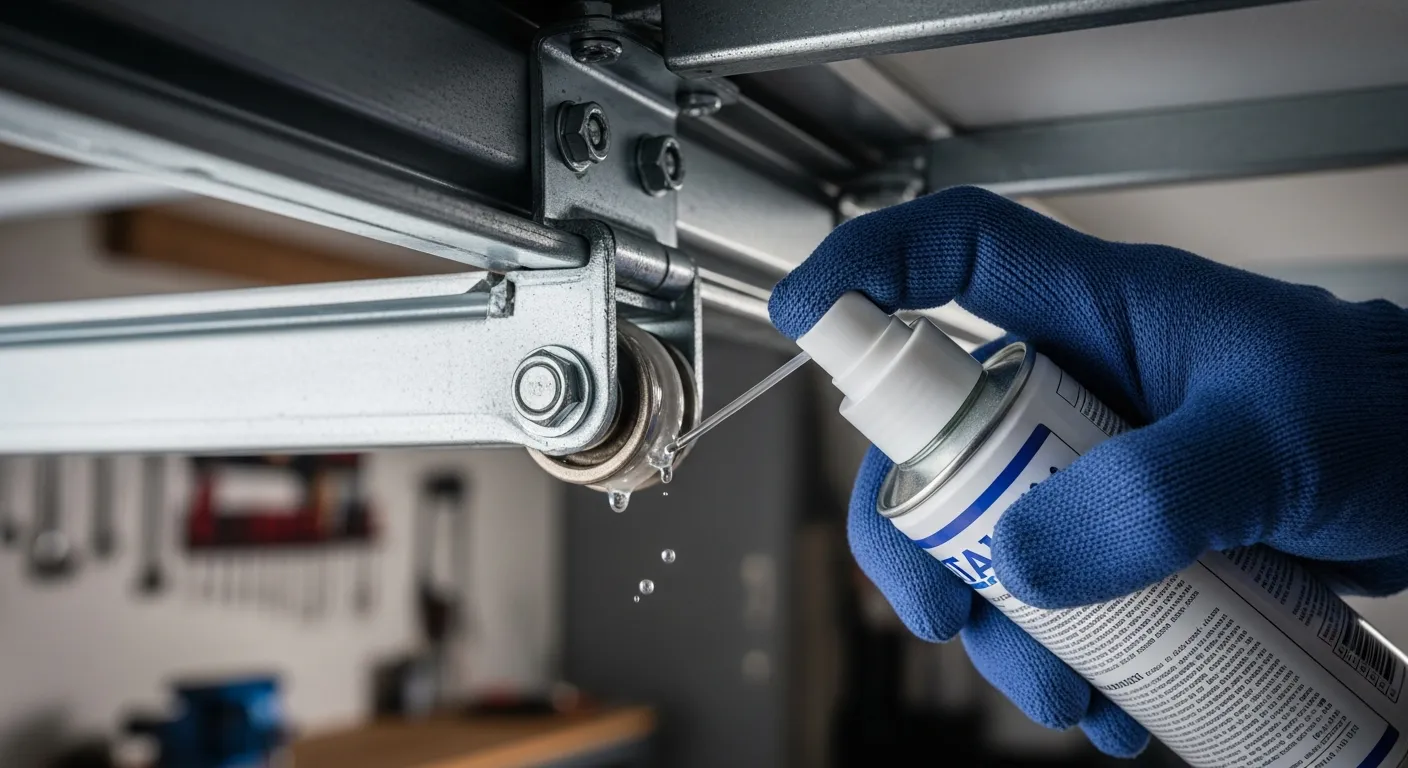
Your garage door is one of the largest and most frequently used moving objects in your home, yet it often gets completely neglected until something breaks. If yours has started squeaking or grinding, that's a sign it needs attention. This guide draws on insights from garage door opener experts LiftMaster with Clopay to explain how a 10-minute task can help ward off expensive repair bills.
How Does Regular Lubrication Improve Garage Door Opener Performance?
According to LiftMaster, "Lubrication is key for smooth operation. [It] reduces friction, minimizes noise, and helps prevent premature wear on your garage door opener's drive mechanism."
A garage door is a large, heavy and complex piece of moving machinery. The opener system is what makes it all work smoothly. Regular lubrication matters for several key reasons.
- Reduce friction and wear: Metal-on-metal contact increases friction and wear. Without lubrication, this friction grinds away at the components and leads to premature failure.
- Prevent rust and corrosion: Lubricants create a protective barrier against moisture, which is critical for preventing rust on springs, hinges and rollers.
- Ensure smooth and safe operation: A well-lubricated door moves predictably and smoothly. A jerky door can be a sign of a problem that could become a safety hazard.
- Extend the life of your opener: When the door moves easily, the automatic opener doesn't have to work as hard. This extends its lifespan.
Which Parts of Your Garage Door Need Lubrication?
Understanding the key components you'll be working with makes the task less intimidating. "Apply a silicone-based lubricant to the moving parts, such as the chain or belt, and the metal rail," LiftMaster advises. "Avoid using grease, which can attract dust and dirt."
Here are the specific parts that need attention:
- Hinges: These are the pivot points that allow the door sections to bend as the door rolls up.
- Rollers: Metal rollers benefit from a light coating on the stem.
- Torsion or extension springs: Springs do the actual lifting work. A light coating of lubricant can prevent rust and noise.
- Tracks: According to LiftMaster, lubricating the tracks themselves will make it harder for the rollers to move. Instead, clean them with a rag to remove dirt and debris.
- Bearings and pulleys: These small spinning parts carry a lot of load and need regular lubrication to function smoothly.
What Kind of Lubricant Should You Use for Garage Doors?
Choosing the right product makes all the difference. The most recommended option is a silicone-based lubricant in a spray can. This is suitable for most parts and works well across a range of temperatures. It won’t evaporate, provides lasting lubrication and protects against moisture. Avoid WD-40 because it’s not a true lubricant and, as a solvent, it will evaporate quickly.
A Step-By-Step Guide to Lubricating Your Garage Door
The process is straightforward and takes just minutes. Remember that you only need a little lubricant for a light coating. You're not trying to create a greasy mess.
Follow these simple steps:
- Practice safety first: Close the garage door and disconnect the automatic opener by pulling the emergency release cord.
- Prioritize cleaning: Wipe down the tracks and rollers with a rag to remove dirt and old grease. This step is important because you don't want to trap debris under fresh lubricant.
- Apply lubricant: Apply a light coat to the hinges, roller stems and springs.
- Wipe away excess: Use a clean rag to remove any drips or excess lubricant.
- Test the door: Reconnect the opener and operate the door a few times to distribute the lubricant evenly across all moving parts.
When Should You Lubricate Your Garage Door?
Most experts recommend lubricating your garage door system twice a year. Just before winter sets in is a good time, as it helps prevent moving parts from freezing or seizing in cold temperatures. Similarly, a spring application prepares your system for increased use during warmer months, when you're more likely to open the garage door frequently.
However, if you hear unusual sounds, don't wait for your scheduled maintenance. “Grinding or squeaking noises might indicate worn-out components or lack of lubrication. Inspect and lubricate as needed,” says LiftMaster.
A 10-Minute Investment Helps Prevent Costly Repairs
Regular garage door lubrication is one of the best investments you can make in your home's maintenance. This simple biannual task reduces noise, prevents premature wear and helps you avoid expensive future repairs. By keeping your garage door opener system running smoothly, you protect both your investment and your family's safety.


