

Replacing a subway tile backsplash is a simple endeavor, it costs a few hundred dollars and a weekend. Moving a load-bearing wall can cost tens of thousands, require structural engineering reports, and trigger a full council approval process. That gap is exactly why layout decisions deserve far more weight than finish selections during any renovation or new build. Most homeowners get this backwards.
Over 60% of renovating homeowners plan to stay in their homes for at least 11 years after completing a renovation (Houzz & Home). That's enough time for a family to expand, contract, age, and change working arrangements entirely. A layout that doesn't account for those shifts becomes a liability.
Why Extreme Open-Plan Has a Ceiling
Open-plan living was all the rage, and for good reason. It solved real issues, i.e. the person consigned to the kitchen being cut off in solitary confinement from the rest of the house. But problems emerged thanks to over-enthusiastic embracing of 'walls, begone!' concept: terrible acoustics, whacking great heating bills and a floor plan that's basically one enormous room with no escape.
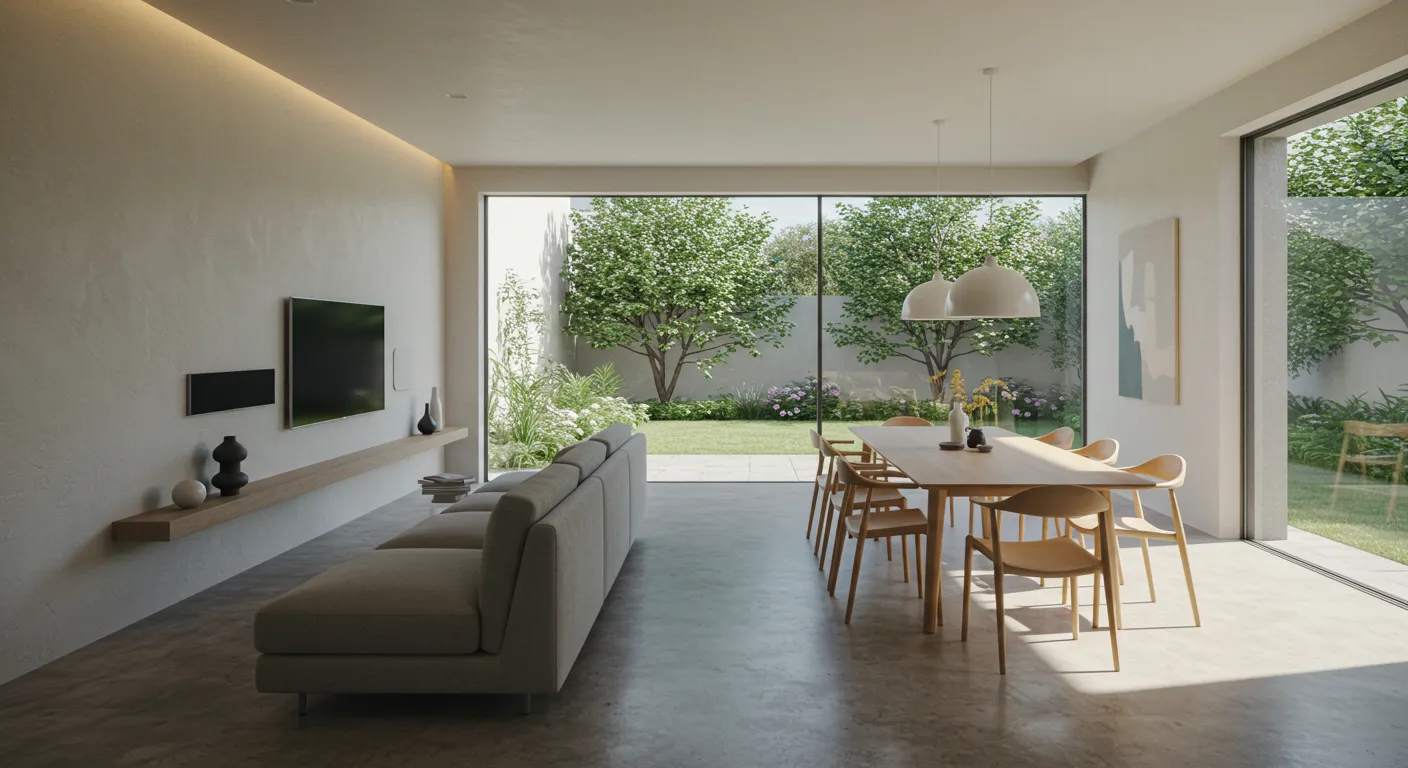
Broken-plan living is a more thoughtful, less radical approach. So half-walls, pocket doors, level changes, and glass partitions keep the light and flow benefits of open-plan while allowing each zone to retain its own acoustic and thermal space. Which is a fancy way of saying it's easier to heat and cool the spaces you're actually using when they have invisible walls.
Build For the Structure, Decorate For the Decade
Renovations that end up costing the most money are the ones that entail ripping out the work of a previous owner who over-capitalized on highly specific choices. The 'home gym' that could never work as a bedroom, the wine cellar that's two inches below grade and two thousand miles from the closest source of water, these types of rooms are either sent to the landfill or incorporated into your design with an often staggering level of cost and effort.
Structural flexibility means centering wet areas wherever possible and grouping plumbing stacks together, keeping electrical chassis open and accessible, and locating load-bearing elements at the perimeter of the house. All of this allows non-structural partition walls to be rearranged, added, or removed without taking a wrecking ball to the entire house. It is not a design that ties your hands: it is a common-sense, plug-and-play blueprint for the next owners too. This, of course, requires not just concept but execution and newcastle renovators that understand local building codes, the often idiosyncratic structural engineering requirements of your coastal renovation, and how site conditions should influence your choices of construction materials and approaches.
Designing For a Life Span, Not a Life Stage
Universal design often gets treated as an accessibility niche, something relevant only to older homeowners or people with disabilities. That framing misses the point entirely. Wider hallways accommodate moving furniture without wall damage. Step-free entryways are useful whether you're carrying a pram, a delivery box, or a mobility aid. Reinforcing bathroom walls now, during construction, costs almost nothing. Retrofitting grab rails into walls that weren't built to support them costs significantly more, and requires patching and repainting on top.
The real value is in the convertible ground-floor room. One space designed with a reinforced ceiling for a future sliding partition, a window positioned to allow natural light from two directions, and proximity to a ground-floor bathroom can serve as a playroom at one stage, a home office at another, and eventually a ground-floor bedroom for an aging parent or a grown child who returns home. This isn't compromise, it's anticipation. The room doesn't look different from any other well-designed room. It just works harder over time.
Where Trends Belong in the Equation
Rapid design trends are not the adversary. They're just tough to permanently integrate in the structure of your building. Open archways, fluted furniture, specific tile sizes, all of those shift in five to seven years. As finishes, you can switch them out. As the default setting for the entire space, they bar your way to future-proofing or sale.
Biophilic architecture, natural light, cross-ventilation, inside-outside flow, does not age. Neither do spatial proportion, ceiling height, or a layout that mirrors how people actually use a house. These are the constants worth fighting for at the structural level.
Treat your layout like infrastructure and your finishes like software and the solution becomes very simple. Infrastructure gets an upgrade every couple of decades and for a good reason. Software gets refurbished every couple of years for any reason you like. Cost effectively.
The Financial Case is Straightforward
When a home is designed to adapt to its occupants' changing needs, it doesn't only prevent them from spending large amounts of money on renovations every 10 to 15 years. It also makes the house maintain its market value for a longer time, as the number of potential buyers increases. If your house has an overly customized design, there will be a lot fewer buyers interested in it. But if you have a functional, light-filled, and adaptable design, you will be able to attract the interest of almost anyone.


