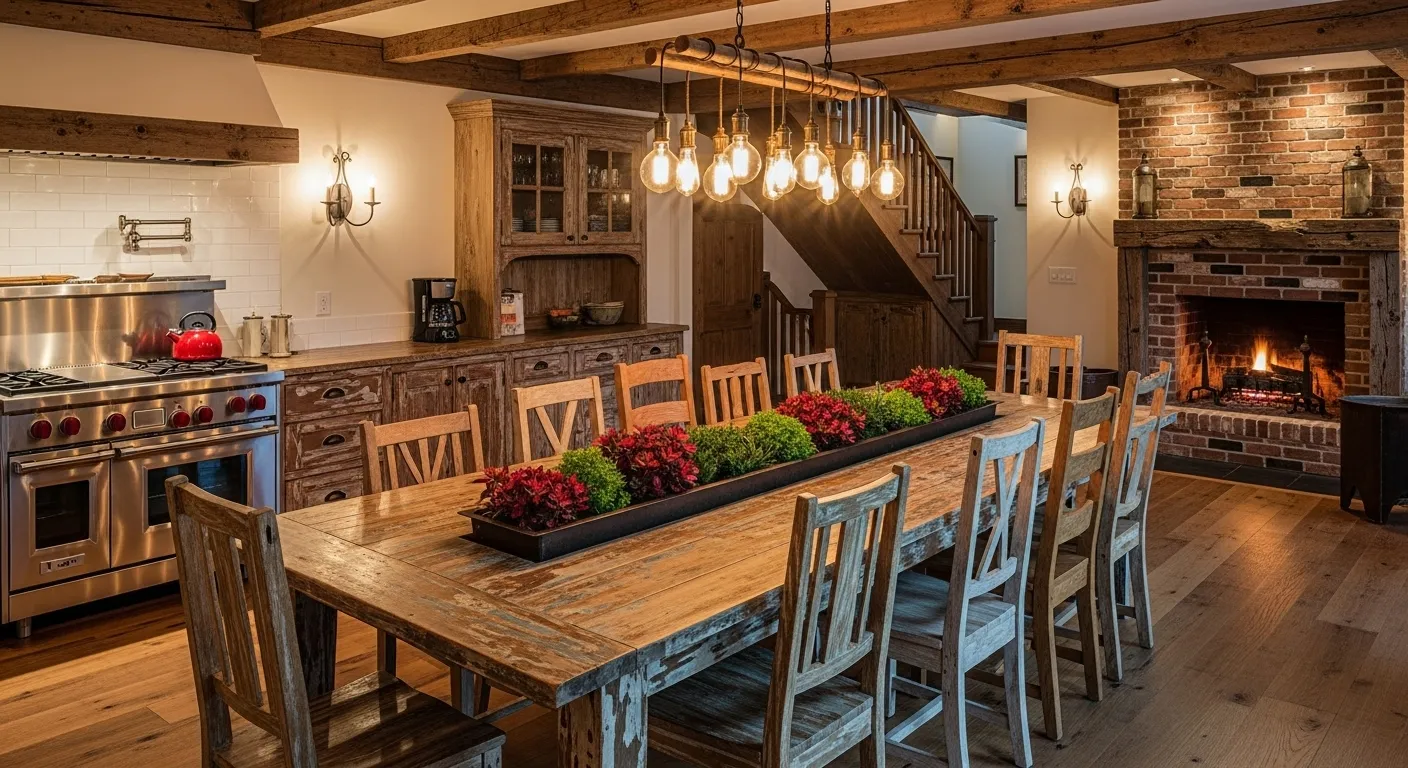
Selecting the ideal home style often involves navigating trends and inspiration online. You may wonder whether a design will endure or is merely a trend. While trendy styles capture attention, certain design choices stand the test of time. Discover what distinguishes enduring elegance from passing fads, and explore design tips to create a home you’ll love for years to come.
What Makes a Design Timeless?
Timelessness isn’t about being old-fashioned, but about having a versatile foundation that’ll last for years. Long-lasting styles usually have the following characteristics.
Inspired by Nature
Wood, stone, linen, wool, leather and anything reminiscent of nature are some of the most trend-proof elements you can find at home. They tend to age gracefully, developing a patina over time rather than just looking worn out. Earth tones, calming blues and deep greens aren’t tied to a specific style and serve as a versatile backdrop. More importantly, natural light is a free light source that can make your space feel open and airy.
Prioritizes Function
“Form follows function” is a design principle that means that the aesthetic should be determined by its intended purpose. In a timeless design, everything has a purpose. For instance, a well-built armchair is a classic because its main job is to be sat in. Built-in bookshelves have a long-lasting appeal because they provide essential storage. Consequently, purely decorative items that lack functionality can feel like clutter once their novelty disappears.
Embraces Simplicity
Timeless interior design highlights lasting beauty through functionality, simplicity and natural materials. This approach creates a calming environment, allowing the room's architecture and meaningful items to stand out. For example, a neutral colored couch can be decorated with throw pillows and blankets in a favorite color. You can see this appeal in enduring interior design styles, such as Scandinavian and minimalism.
Features Subtle Patterns and Textures
Patterns that are geometrically simple or have historical roots stand the test of time. Examples of classic patterns include stripes, plaid, herringbone and simple florals. A simple stripe on accent furniture for a subtle pop is enough. Texture — in the form of a woven wool rug, linen curtains, or a piece of pottery — can make a room feel complete.
How to Spot a Fleeting Trend
Popular styles often lack staying power and may not be suitable for enduring design solutions. Look out for these telltale red flags before making your next design decision.
Overexposure on Social Media
Design trends that appear everywhere on TikTok, Instagram and Pinterest simultaneously — like checkered patterns, excessive bouclé furniture and checkerboard floors — tend to lose their charm. When a specific item, such as a wavy mirror, suddenly appears in every influencer’s post, it signals market saturation rather than lasting appeal.
Overly Specific or Bold
Some design choices are so dominant that they can’t easily be adapted to other styles. Take the Tuscan kitchen trend of the early 2000s as an example. The faux finishes and grape motifs don’t look as modern as they did before. There’s also the avocado green appliances trend of the 1970s. These styles are tied to their eras, which instantly makes a space outdated.
Low-Quality or Synthetic Materials
Many manufacturers routinely opt for lower-quality materials to keep on-trend styles within reach for a wider audience. While this approach makes it tempting to update your decor, these items are unlikely to withstand the test of time. Particleboard covered with a wood-grain veneer, synthetic fabrics prone to rapid wear and glossy plastics that attempt to mimic polished metal often compromise both aesthetic appeal and durability.
High-Maintenance or Inconvenient Features
Many popular design trends, while visually impressive, can prove impractical in everyday life. For instance, an open-concept kitchen with all open shelving requires constant organization, which can be challenging if you’re a busy parent or full-time employee. Another example is a beautiful couch with delicate upholstery that is easily damaged by children or pets. Ultimately, if a design choice complicates your daily routine, frustration is inevitable, regardless of its popularity.
How to Use Timeless and Trendy Styles Wisely in Your Home
A good interior is shaped by a solid vision that stands the test of time. However, that doesn’t mean there’s no room for trendy things that you know you’ll love for years. Here’s how to redesign your home while occasionally infusing it with trendy styles.
Use Sustainable Materials
Timeless designs are usually tied to deeper values. For instance, as society becomes more environmentally conscious, there’s a growing preference for sustainable materials at home. This is clearly reflected in modern flooring options, where low-volatile organic compound laminates are more appealing due to their low-maintenance and eco-conscious properties.
Follow the 80/20 Rule
Allocate about 80% of your budget and design focus to foundational pieces. Think about the expensive, difficult-to-change items like kitchen cabinetry, dining table, sofa and bed frame. Then, use the remaining 20% to experiment with trends. These are low-cost, easy-to-swap items that infuse your space with personality and a modern feel.
Use Paint as a Low-Commitment Way to Be Trendy
Paint is an easy yet impactful way to refresh any space. If you fall in love with a trendy color, like dusty sage green or deep terracotta, use it on your wall. It’s an easy strategy to make a statement, and if you get tired of it in a few years, you can spend a weekend repainting to freshen up your space with a new color. This is much easier than replacing a trendy couch.
Choose a Trend and Repeat It Subtly
Instead of using five different unrelated trends in your space, pick one or two that you genuinely love and repeat them in small doses. For example, if you love a trending color, you could incorporate it into a ceramic vase on your bookshelf or a set of throw pillows. Simple repetitions like these make the trend feel like a strategic part of your overall design.
Prioritize What You Love
Before you buy or add something, consider whether you truly love it or just like it because it is popular now. If you have a genuine connection to a decor, pattern or furniture, chances are you’ll love it for years. A home filled with intentional additions feels more welcoming than one designed purely for social media.
Design With Confidence
Creating a home you love involves building a timeless foundation and using trends as the fun accents they’re meant to be. Make your home reflect your personal style and remain a place you genuinely love for years to come.