You painted the walls. You found the sofa you wanted. There's a rug that fits and throw pillows that match. But something still feels off, like the room is close but not there yet. Most people assume they need more accessories. They're usually wrong.
That unfinished feeling rarely comes from a lack of decor. It comes from a storage problem that's also a structural problem. Here's what's actually going on and what fixes it.
Why a Sideboard Often Becomes the Piece That Pulls a Room Together
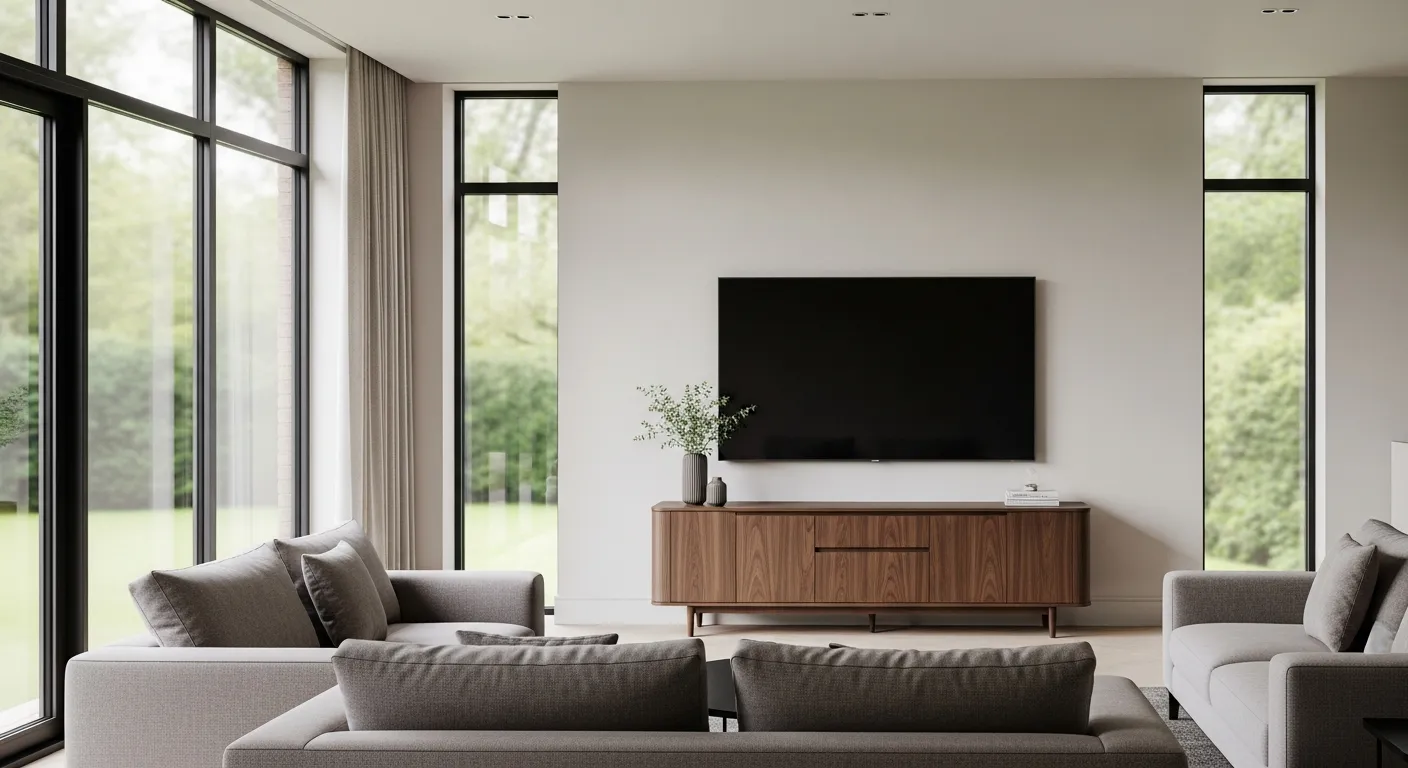
Most living rooms are missing what designers call a horizontal anchor: a low, wide surface that runs along one wall and visually grounds the space. Without it, everything floats. Furniture sits at similar heights, walls feel undefined, and no matter how many accessories you add, the room never quite settles.
A well-chosen sideboard cabinet fills that role in a way a console table can't. A console table gives you a surface. A sideboard gives you a surface plus storage: doors, drawers, and a clean face that doesn't advertise what it's holding.
In design terms, it does three things at once. It anchors the room visually, gives your decorative objects somewhere intentional to land, and quietly absorbs the things you'd rather not see. That's a lot of work for one piece of furniture.
It creates a visual anchor, not just storage
A long, low horizontal line across a wall changes the scale of the whole room. The wall stops feeling bare. The furniture arrangement starts looking intentional. This is why designers reach for sideboards early: they solve a composition problem, not just a storage problem.
It hides what needs hiding without looking like it's hiding anything
A good sideboard with the doors closed is just a piece of furniture. Nothing about it signals that clutter lives inside. That's the gap between storage that works and storage that makes a room feel messier than it is.
A Tall Bookcase Can Add Height Where a Room Feels Flat
Some living rooms don't just need a horizontal anchor. They also lack vertical movement. When all the furniture sits at roughly the same height, the eye has nowhere to go. The room feels static, even when it's well-decorated.
A tall modern bookcase on an adjacent wall gives you the contrast that makes a room feel designed: low and wide on one wall, tall and narrow on another. The shift in scale creates rhythm. The room gains dimension without a single renovation.
The two pieces don't need to match. They need to relate: a shared wood tone family, consistent hardware finish, or similar design language. Matching is overrated. Cohesion is what actually matters.
The low-and-wide versus tall-and-narrow contrast
Horizontal lines read as stability. Vertical lines read as energy. You want both in a room that feels complete. A sideboard and a bookcase provide that contrast in a way that sofas, side tables, and rugs simply can't.
A bookcase as a styling layer, not just storage
Open shelving gives you a place to build visual depth: books, objects, plants, and negative space layered at different heights. The bookcase stops being background furniture and becomes a wall feature. Styled well, it's often the most interesting thing in the room.
How to Tell What Your Living Room Is Actually Missing
Before buying anything, it helps to diagnose the specific problem. Most rooms fall into one of three categories.
Too much empty wall with nothing to anchor it
If one of your walls is mostly bare and the room feels off-balance, that's usually where a sideboard belongs. A large blank wall isn't a design choice. It's an unfinished one.
Everything sits at the same height
Sofas, side tables, coffee tables: when everything lands at roughly the same elevation, the room reads flat. A tall bookcase breaks that monotony without any structural changes.
Storage exists but doesn't look intentional
A mix of floating shelves, IKEA units, and things piled on surfaces creates visual noise even when everything technically has a place. Furniture-grade storage pieces bring that noise down because they signal intention.
Using Low and Vertical Storage Together Without Making It Feel Busy
One anchors the room, one draws the eye upward
The sideboard stabilizes. The bookcase activates. They're doing different jobs, which is exactly why they work together rather than competing for the same visual space.
Both should reflect how the room actually gets used
A sideboard heavy on drawers works if you're storing small items. One with cabinet doors handles larger things better. A bookcase with closed lower sections is smarter if you want to hide less attractive items at eye level. Buy what fits your life, not what photographs well in someone else's home.
They don't have to match, but they do have to relate
A walnut sideboard with a white oak bookcase in a similar silhouette works fine. One or two consistent elements, like a wood tone family or a hardware color, is enough to make both pieces feel like they belong in the same room.
Styling the Surfaces So They Don't Become Clutter Magnets
Use fewer objects with more breathing room
The urge to fill every inch of a sideboard top is real and almost always wrong. Leave at least 30 percent of the surface empty. The space between objects is part of the composition.
Mix one tall, one medium, and one low object per grouping
A lamp, a small vase, and a stack of books are a complete grouping. This formula creates natural height variation without requiring any design background. You don't need seven things to make a surface look styled.
One tray corrals the everyday items
Keys, sunglasses, the mail you'll deal with later: without a boundary, they spread. A tray on the sideboard gives them a defined zone so the rest of the surface stays clear. It's a simple organizing technique often recommended by Home Organizing Services to keep frequently used items contained.
The Takeaway
That unfinished feeling is rarely about needing more accessories. It's about needing the right structural pieces. A sideboard anchors the room horizontally. A tall bookcase gives it vertical life. Together, they create the kind of balance that makes a space feel like it was designed on purpose, even if you figured it out gradually.