

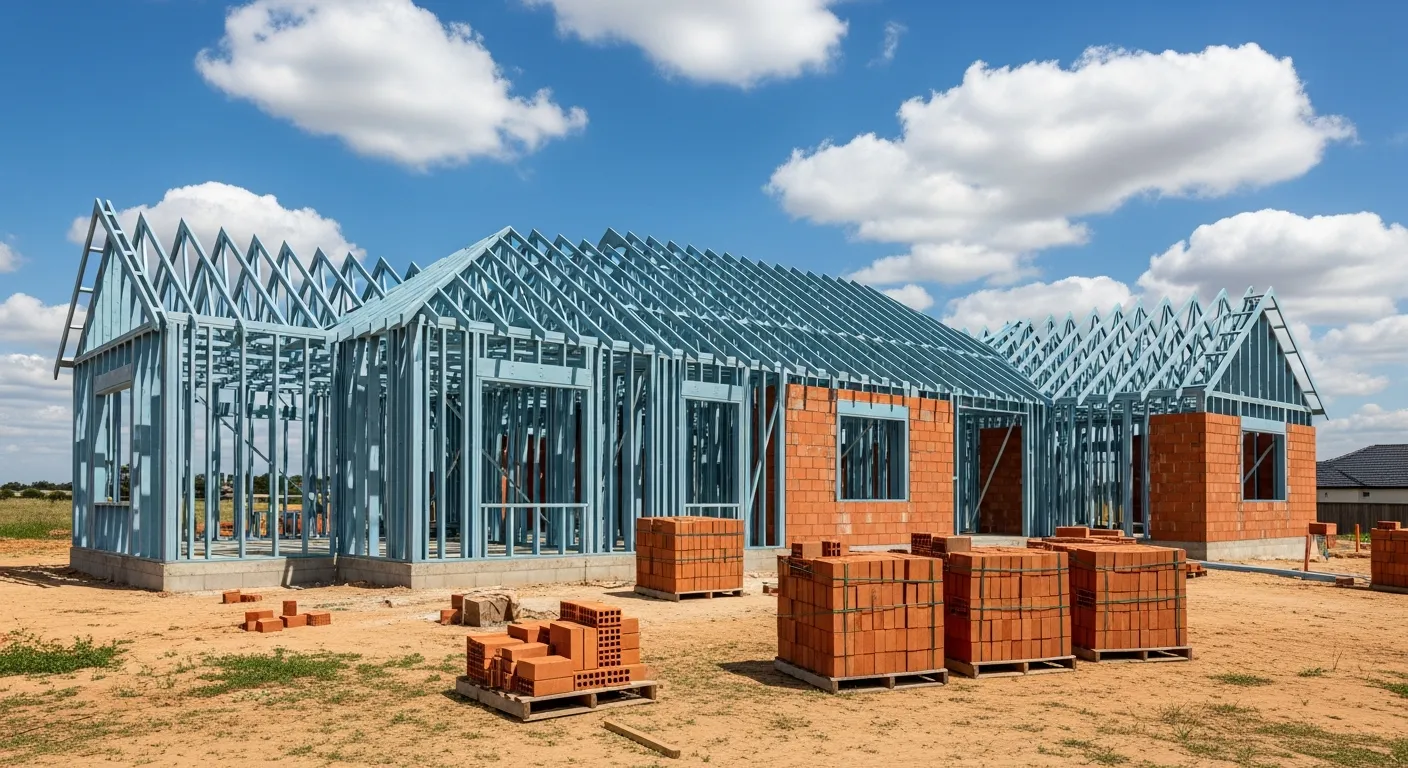
Most conversations about building a new home get absorbed by the exciting stuff, floor plans, kitchen finishes, bathroom tiles, landscaping. The structural system holding everything up tends to get far less attention than it deserves.
But here's the thing: the frame is the foundation of everything. The decisions made at that stage affect the building's strength, longevity, thermal performance, and long-term cost. And for a growing number of homeowners and builders in 2026, steel framing is becoming the clear answer.
Why the Conversation Around Framing Has Changed?
Timber has been the default framing material in residential construction for generations. It's familiar, widely available, and well-understood by the trades. But it also comes with limitations that are becoming harder to ignore, particularly as building performance expectations rise and the long-term costs of maintenance and repair become more prominent in homeowners' thinking.
Steel framing addresses several of those limitations directly. And as fabrication technology has advanced, the precision and accessibility of steel frame systems have improved to the point where the comparison with timber is genuinely worth revisiting for any serious home build.
Dimensional Accuracy and Structural Consistency
One of the most immediately practical advantages of precision-built steel frames is dimensional accuracy. Steel components are fabricated to exact specifications, every stud, every beam, every connection point is cut and formed with tolerances that timber simply can't match.
Why does that matter practically? Because accuracy at the frame stage flows through to everything that follows. Walls that are straight and true make finishing trades easier. Door and window openings that are exactly right mean frames fit for the first time. Floors that are level make tiling, flooring, and cabinetry installation cleaner and faster.
On a build where dozens of contractors are working in sequence, the accuracy of the frame sets the quality standard for everything downstream.
Resistance to the Problems That Cost Homeowners Money
This is where steel makes a compelling long-term case. Timber frames are susceptible to a range of problems that steel is largely immune to:
- Moisture and Rot: timber absorbs moisture, which leads to decay over time, particularly in climates with significant rainfall or humidity variation
- Termite Damage: one of the most costly structural problems in residential buildings, and entirely absent as a risk with steel
- Warping, Twisting and Shrinkage: timber moves with changes in temperature and humidity, affecting structural alignment over time
- Fire Performance: steel does not combust, making it inherently more resistant to fire spread within the frame
For homeowners thinking about a property they intend to own for decades, the maintenance and repair cost implications of these factors are real and worth weighing carefully.
Thermal and Energy Performance
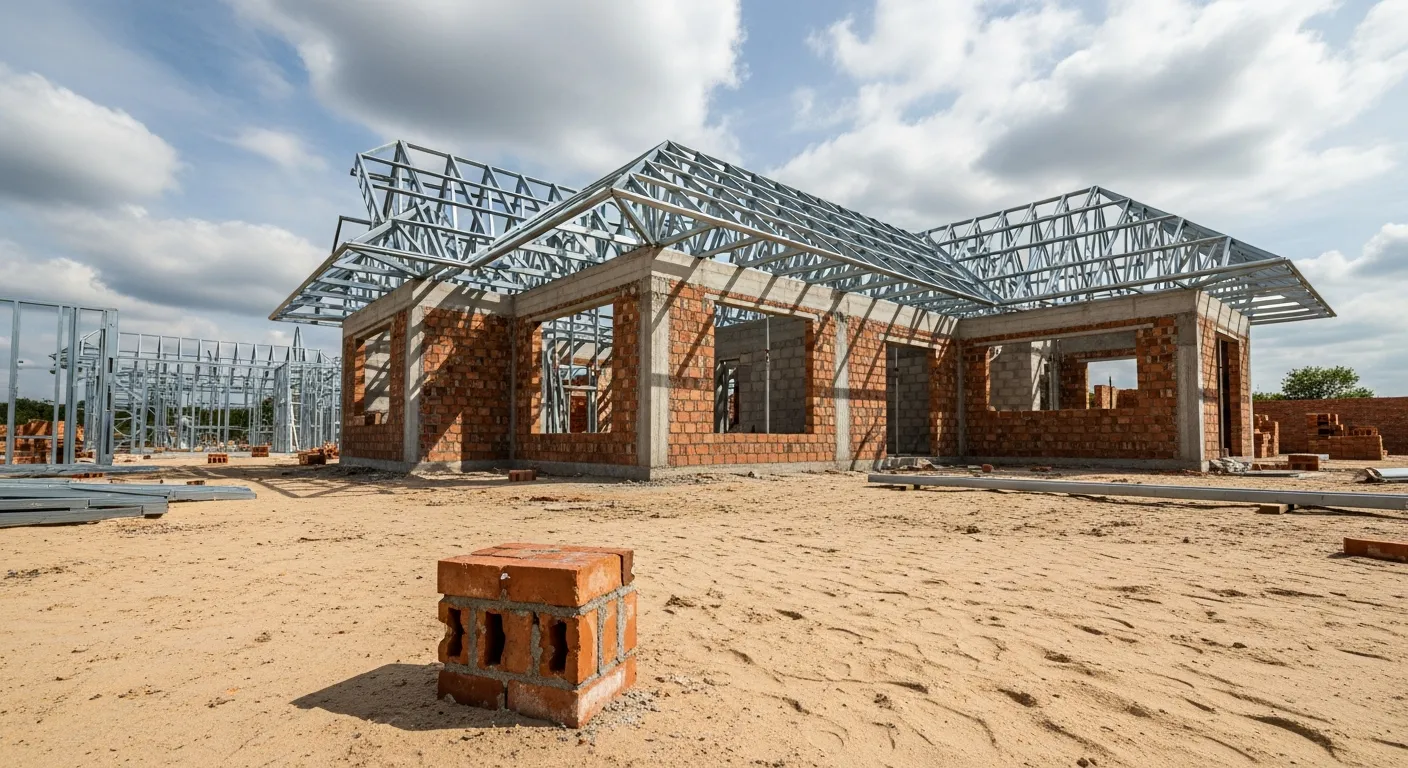
A well-designed steel frame building can achieve excellent thermal performance, but it does require careful detailing, particularly around thermal bridging. Steel is a better conductor of heat than timber, which means the design of insulation systems matters more.
The good news is that this is a well-understood challenge in modern steel frame construction, and the solutions are established. With appropriate insulation strategies, a steel frame home can meet and exceed the energy performance standards of equivalent timber builds.
This is worth discussing early in the design process, ideally with builders who specialise in steel frame systems and understand the thermal detailing requirements from the ground up.
Sustainability and Material Efficiency
Steel is one of the most recycled materials on earth. At end of life, steel framing components can be fully recovered and recycled, unlike treated timber, which often ends up in landfill.
According to the World Steel Association, steel is one of the world’s most recycled materials and plays a major role in circular construction and long-term material sustainability.
The fabrication process also generates less waste than traditional timber framing. Steel components are precision-cut off-site with minimal excess material, helping reduce on-site construction waste and improving overall material efficiency. For homeowners prioritising sustainability, durability, and long-term resource efficiency, those factors are becoming an increasingly important part of the building conversation.
The Western Australian Context
In Western Australia specifically, the case for steel framing has additional dimensions. The climate, ranging from the coastal humidity of Perth to the more extreme conditions of regional WA, creates conditions where timber's vulnerabilities are genuinely tested. Termite pressure, moisture variation, and temperature extremes all play to steel's structural advantages.
According to the experts at Steel Frames WA, precision-fabricated steel frame systems designed for the Western Australian climate offer homeowners and builders a structural solution that performs reliably across the state's diverse conditions. It combines engineering precision with the practical advantages of a material that doesn't warp, rot, or attract pests.
For anyone building in WA and weighing structural options, that local expertise and climate-specific knowledge is worth accessing early in the planning process.
What to Discuss With Your Builder?
If you're considering steel framing for a new build or major renovation, here are the conversations worth initiating:
- Fabrication Precision: how are components specified, and what quality controls are in place?
- Thermal Detailing: how will insulation be managed to address thermal bridging?
- Trade Familiarity: how experienced is the building team with steel frame construction?
- Local Supply and Lead Times: particularly relevant for regional builds
- Cost Comparison Over Full Lifecycle: not just upfront cost but maintenance implications over a 20–30 year horizon
The upfront conversation pays dividends. Steel frame construction done well is an excellent long-term investment. Done without proper planning, any structural system can underperform.
Conclusion
The frame of your home is not a place to cut corners or default to habit. It's the decision that affects structural integrity, maintenance costs, energy performance, and longevity for the entire life of the building.
Precision-built steel framing offers genuine advantages across all of those dimensions, advantages that are increasingly hard to overlook as construction standards rise and homeowners make more informed, longer-term decisions about how they build.
If you haven't had a detailed conversation about steel framing for your next project, it's worth starting one.


