

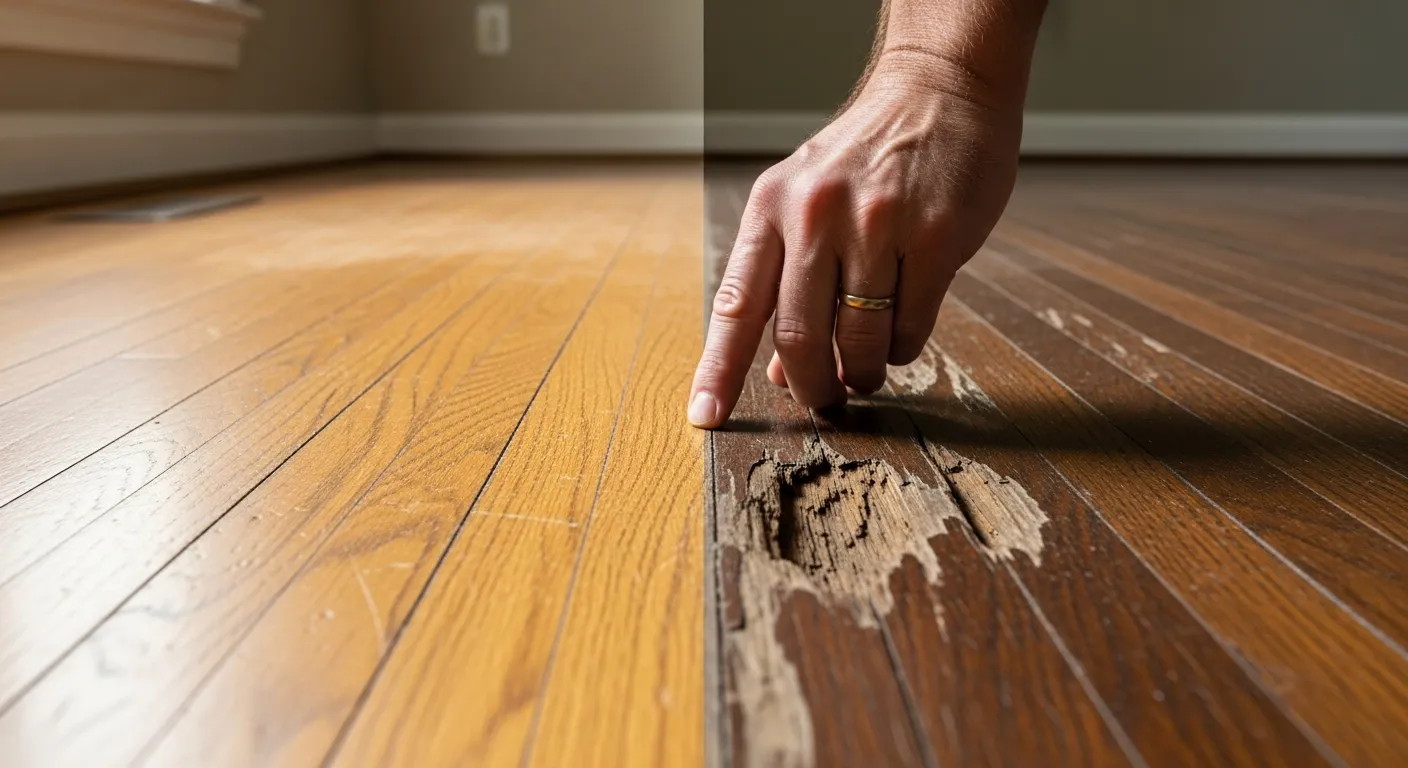
Almost every homeowner I meet opens with the same question. What do new floors run? And nearly every time, that's the wrong place to start. Half the floors I get called out to look at, the scratched-up gray ones people have already given up on, don't need replacing at all. They need a refinish. There's a real difference between the two, and it's usually a few thousand dollars wide.
I run a hardwood refinishing company, and most of the floors folks have written off can be brought back. The trick is telling which ones. Here's how to sort yours out before you spend a dime on new material.
Start with thickness. Solid hardwood is forgiving. A standard three-quarter-inch board can be sanded somewhere between five and seven times over its life, which is why I'm still refinishing oak floors that were laid in the 1940s and they come out looking new. Engineered wood is a different animal. It's a thin layer of real wood over plywood, and that top layer can be as little as two millimeters. Some engineered floors will take one careful sanding. Plenty won't take any. Pull up a floor vent or look hard at a doorway threshold and you can usually see the edge of a board well enough to know what you've got.
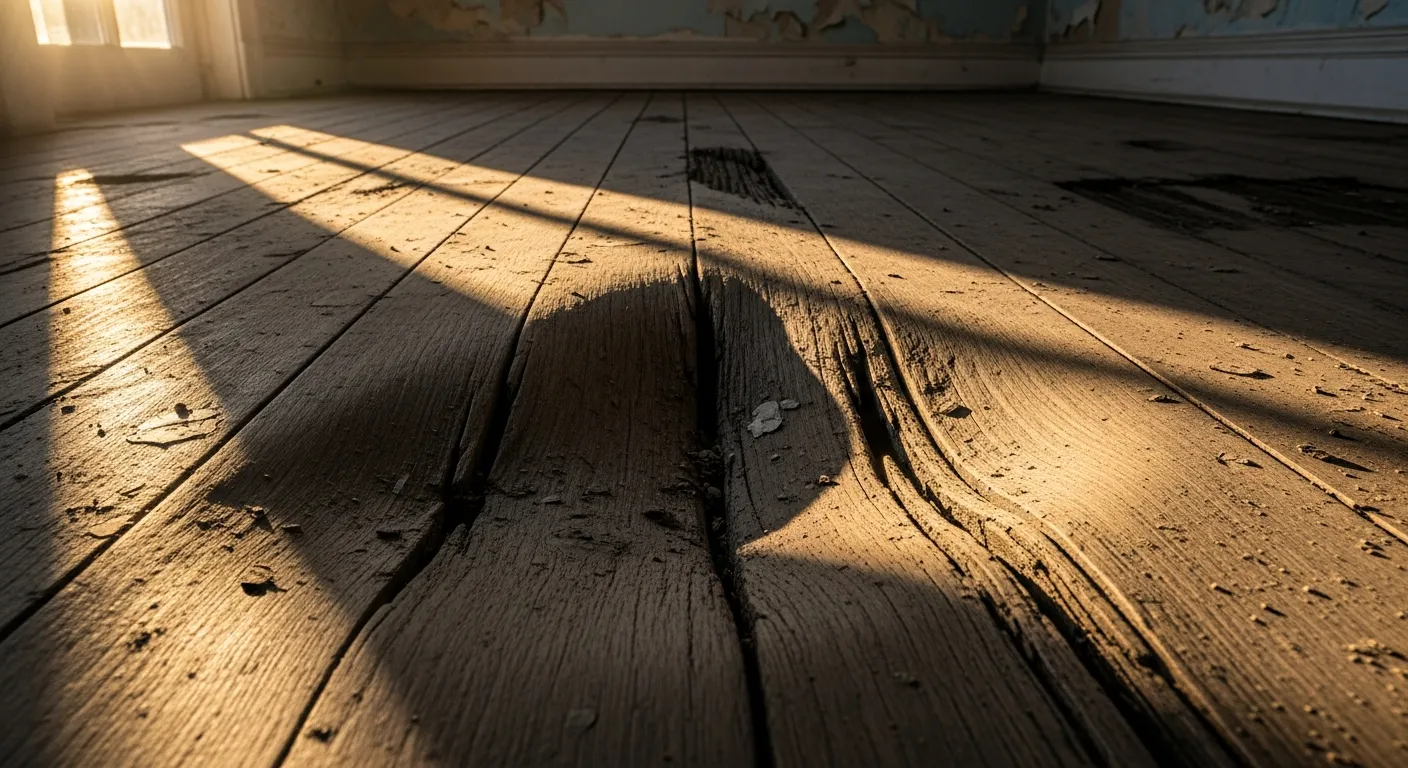
Then check for water damage. This is the real dividing line. Look across the floor with light coming in low from a window. If the edges of the boards sit higher than their centers, that's cupping. A mild case usually flattens back out once the wood dries and gets sanded, and I've rescued plenty of floors that looked alarming in February and were fine by July. What I can't rescue is wood that's gone further than that. Boards humped up in the middle. Seams splitting open or a spot that gives a little when you step on it. Once water has gotten into the wood itself, sanding won't bring it back, and those boards just have to come out.
Now the part that surprises people. That beat-up surface you can't stand? Almost never the wood. It's the finish sitting on top of the wood, and stripping the old finish off is the whole job. Drag your fingernail across a scratch. If it catches, the gouge made it into the board. If it doesn't, you're feeling worn finish, and that covers most of what people hate about an old floor: the dog's claw marks, the dull path worn down the hallway, the faded patch where the afternoon sun lands. All of it sands away. The wood beneath it has been sitting there protected the entire time. I've pulled a board mid-job, handed it to the homeowner, and watched their face change when they saw the color that had been hiding under twenty years of grime.
There's a middle option most people have never heard of, too. Say the finish is worn and tired but the wood under it is sound and never took on water. We can scuff up the old finish and roll a fresh coat right over it, no full sanding at all. It costs a fraction of a refinish and buys you several years. It won't pull deep scratches out and it won't change your color, but if the floor has only lost its shine, a screen-and-recoat is the cheapest honest answer I've got.
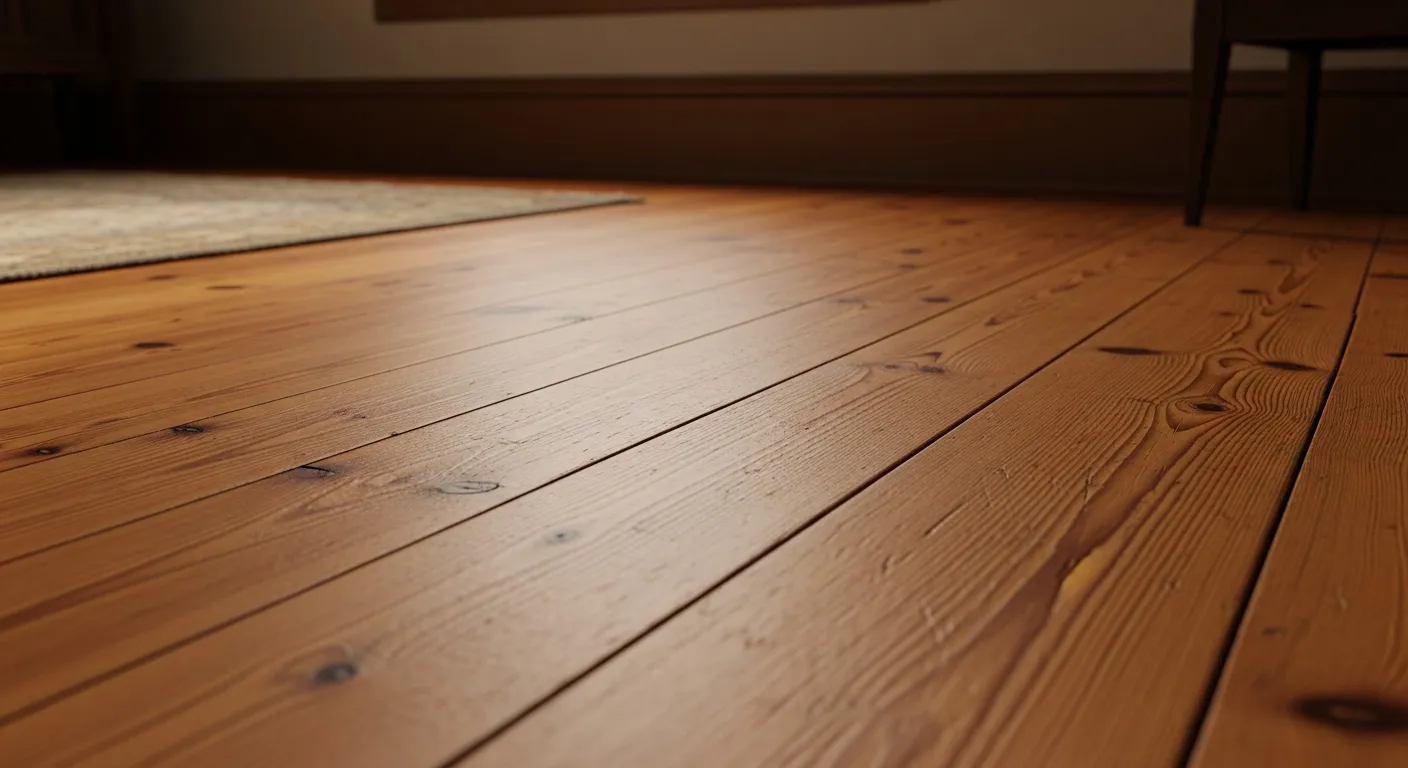
Gaps and squeaks scare people more than they should. Old houses move. The thin gaps that open between boards in winter close right back up in summer, and a squeak is almost always a loose nail rubbing, not a floor that's dying. Neither one sends you to replacement. We handle both during the refinish anyway.
So when does replacement actually win? A few clear cases. The wear layer is gone and there's nothing left to sand. Water or termites have gotten into the subfloor. Or you just want a different species or a wider board than what's down there now. Outside of those, refinishing is the better call almost every time. It costs less, and it keeps the original wood that gave the house its character in the first place. You can't buy eighty-year-old heart pine at a store.
The money usually settles it. Tearing out the old floor and laying new hardwood, once you total demo, materials, and labor, tends to run two to three times what refinishing what you already have costs. And a refinish skips the ugly parts of a replacement. There's no demolition, no dumpster parked in the driveway, none of those days spent walking around on a bare plywood subfloor. We sand, stain it if you want a new color, lay three coats, and about a week later you're back on the floor. Hold onto the wood you've got and you hold onto most of your budget with it. That's the real case for refinishing hardwood floors instead of ripping them out.
Before you call anyone, including me, go look for yourself. Get down on the floor. Drag a fingernail over a scratch and feel whether it bit into the wood or only the finish. Lean on the spots that feel soft. Find a vent or a threshold and see how thick the boards really are. Five minutes on your knees will tell you most of what I would, and it'll keep you from paying to replace a floor that only ever needed a refinish.
