

Why Your Granite Finish Matters More Than You Think
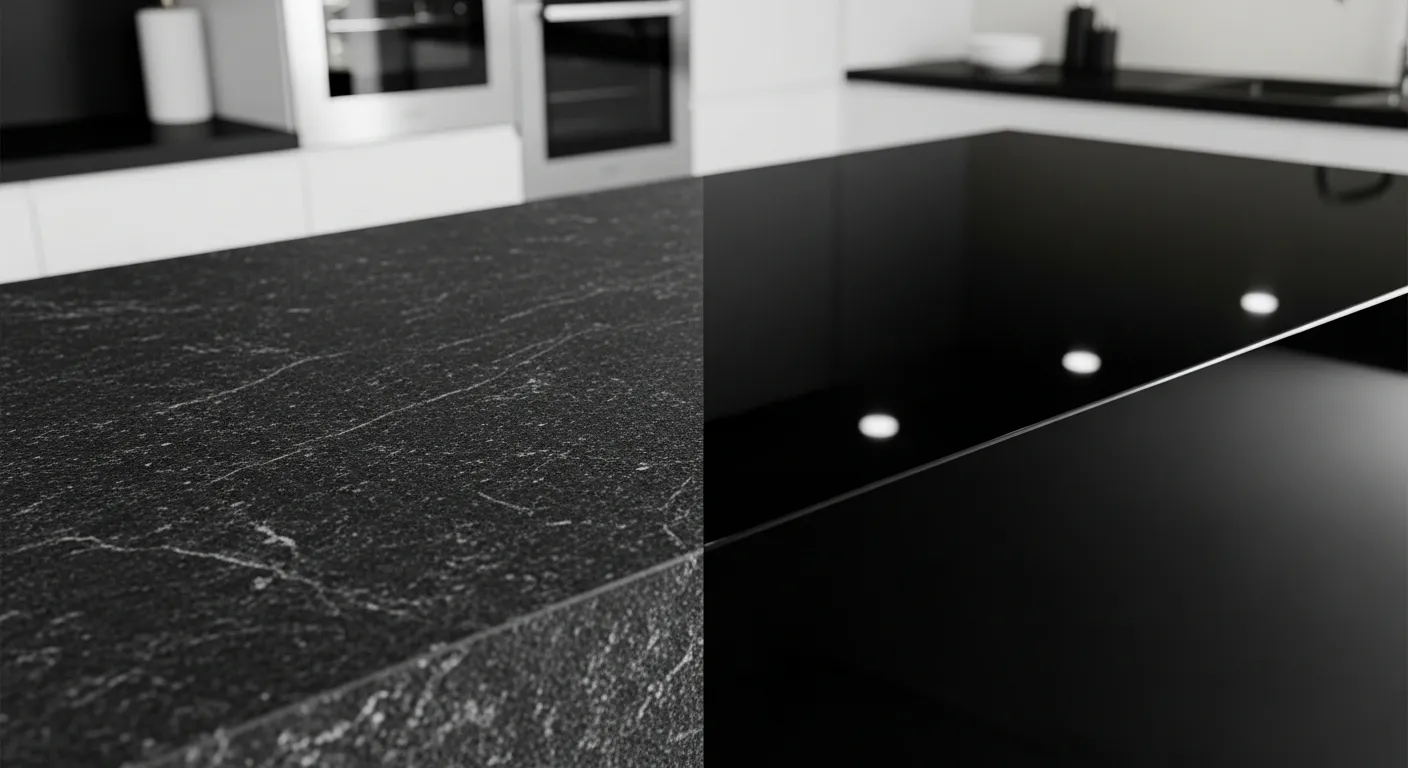
Picture yourself in a stone showroom, running your hand across two slabs of the exact same granite color. One feels like glass and throws light back at you. The other has a soft, dimpled texture that seems to pull you in. Same stone, completely different personality. That difference comes down to the finish.
Granite remains one of the most popular natural stone countertop materials on the market, and for good reason: it's hard, heat-resistant, and genuinely beautiful. But the finish you select changes far more than just how the stone feels under your fingertips. It shapes the countertop's appearance, how much maintenance it demands, how durable it seems in daily life, and whether it fits the overall style of your kitchen.
This article breaks down the two most common granite finishes, leathered and polished, in a clear side-by-side comparison so you can walk into your renovation with confidence. And the timing is right for this conversation. According to recent kitchen design trends, textured and matte surfaces are gaining serious ground alongside the classic high-gloss look. Homeowners have more options than ever, which also means more decisions to make.
What Is a Polished Granite Finish?
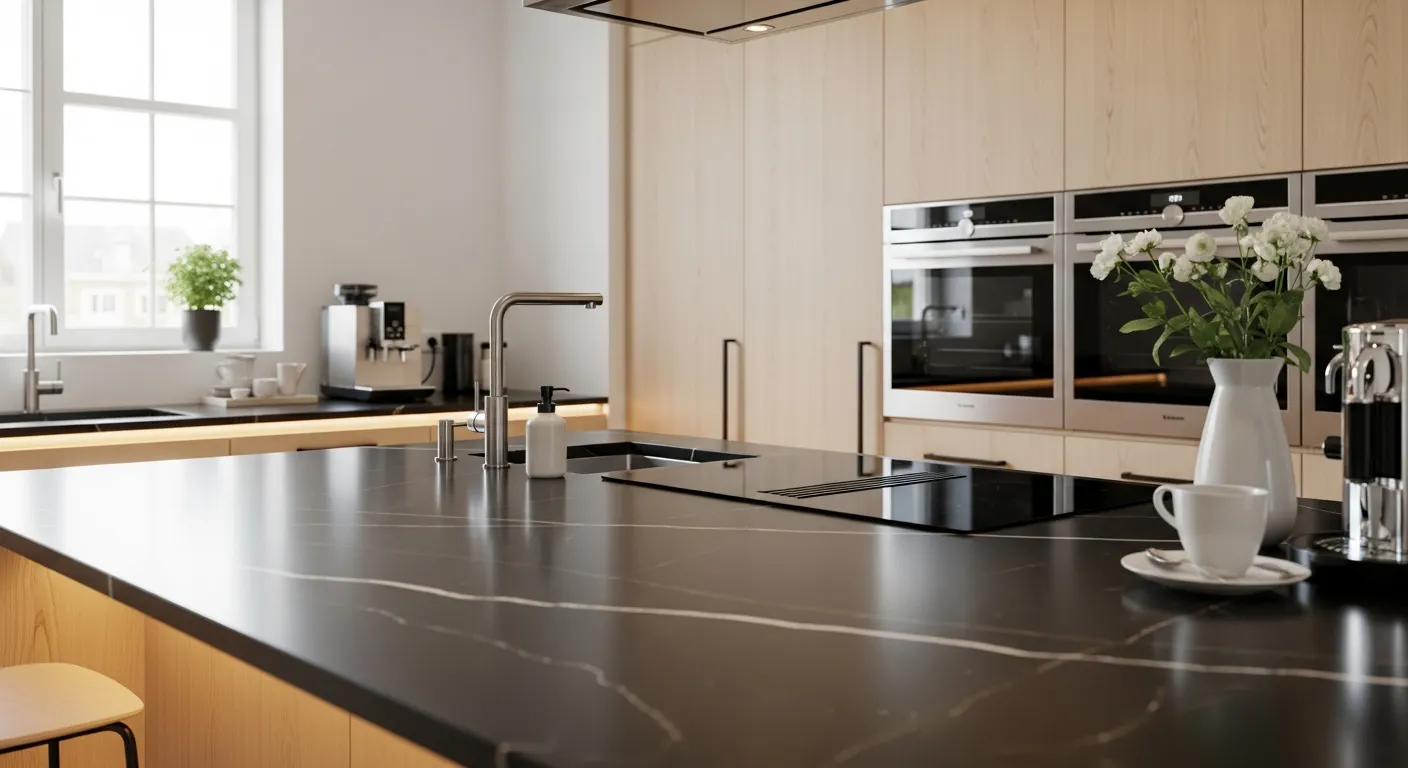
Polished granite is what most people picture when they think of stone countertops. During fabrication, the slab is buffed with progressively finer abrasives until the surface reaches a mirror-like, reflective sheen. It's the finish you've seen in magazine spreads and high-end kitchen showrooms for decades.
Appearance: The polishing process deepens color saturation dramatically. Veining becomes vivid, mineral flecks sparkle, and the glossy surface reflects light in a way that can make a kitchen feel brighter and more spacious. If you want your granite's natural patterns to really pop, polished is the finish that delivers.
Maintenance: Polishing partially closes the stone's pores, which gives polished granite a slight natural edge in stain resistance. That said, sealing is still recommended. Day to day, the smooth surface is easy to wipe down, though fingerprints and water spots show readily, especially on darker colors.
Best For: Traditional, transitional, and modern-glam kitchens. Polished granite pairs beautifully with high-contrast cabinetry, statement pendant lighting, and sleek hardware. If your design leans toward refined elegance, this finish speaks that language fluently.
The tactile experience is exactly what you'd expect: smooth, cool, and satisfying to the touch.
What Is a Leathered Granite Finish?
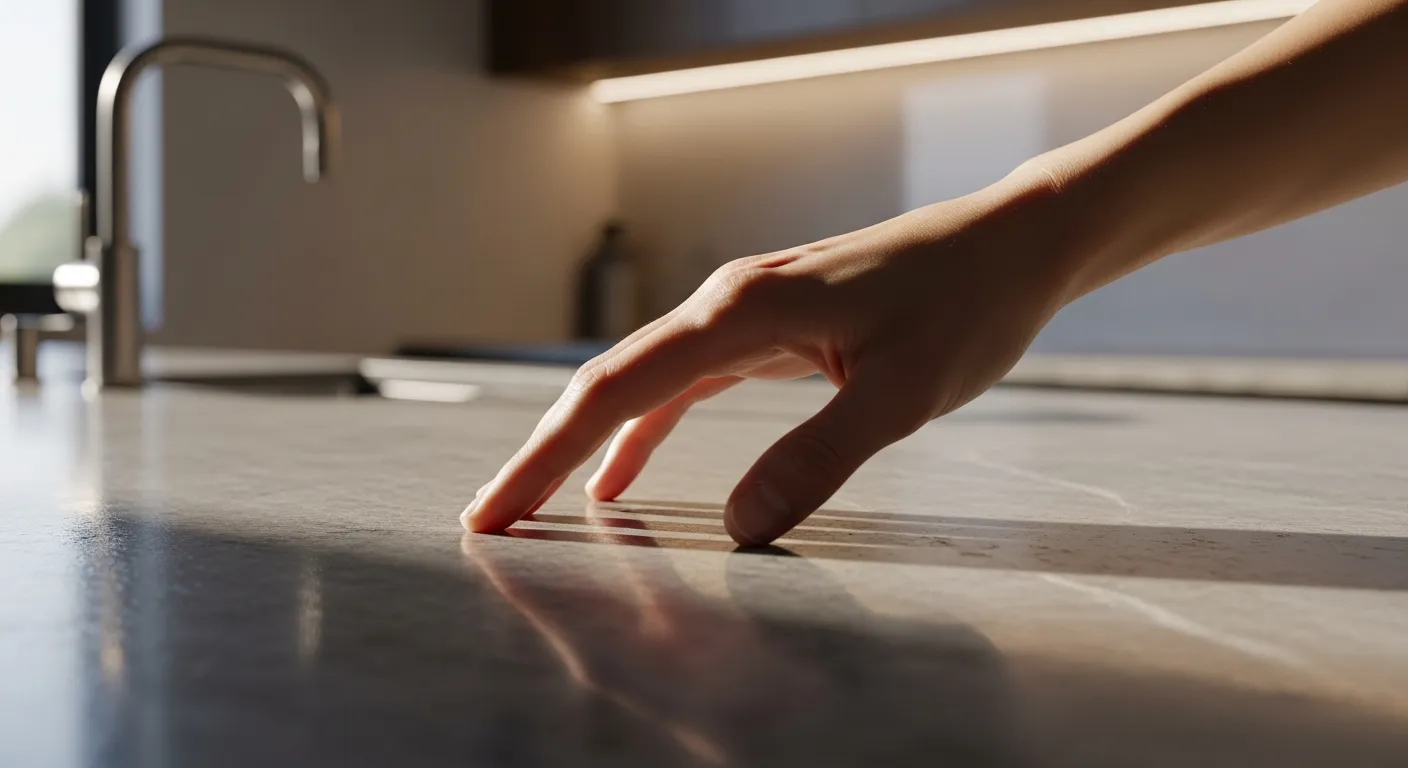
Leathered granite takes a different path. The slab is first honed, meaning it's smoothed down without achieving a high gloss. Then diamond-tipped brushes work the surface to create a soft, dimpled texture that resembles, as the name suggests, leather. You can learn more about stone finishing techniques explained by the Natural Stone Institute if you're curious about the full range of processes available.
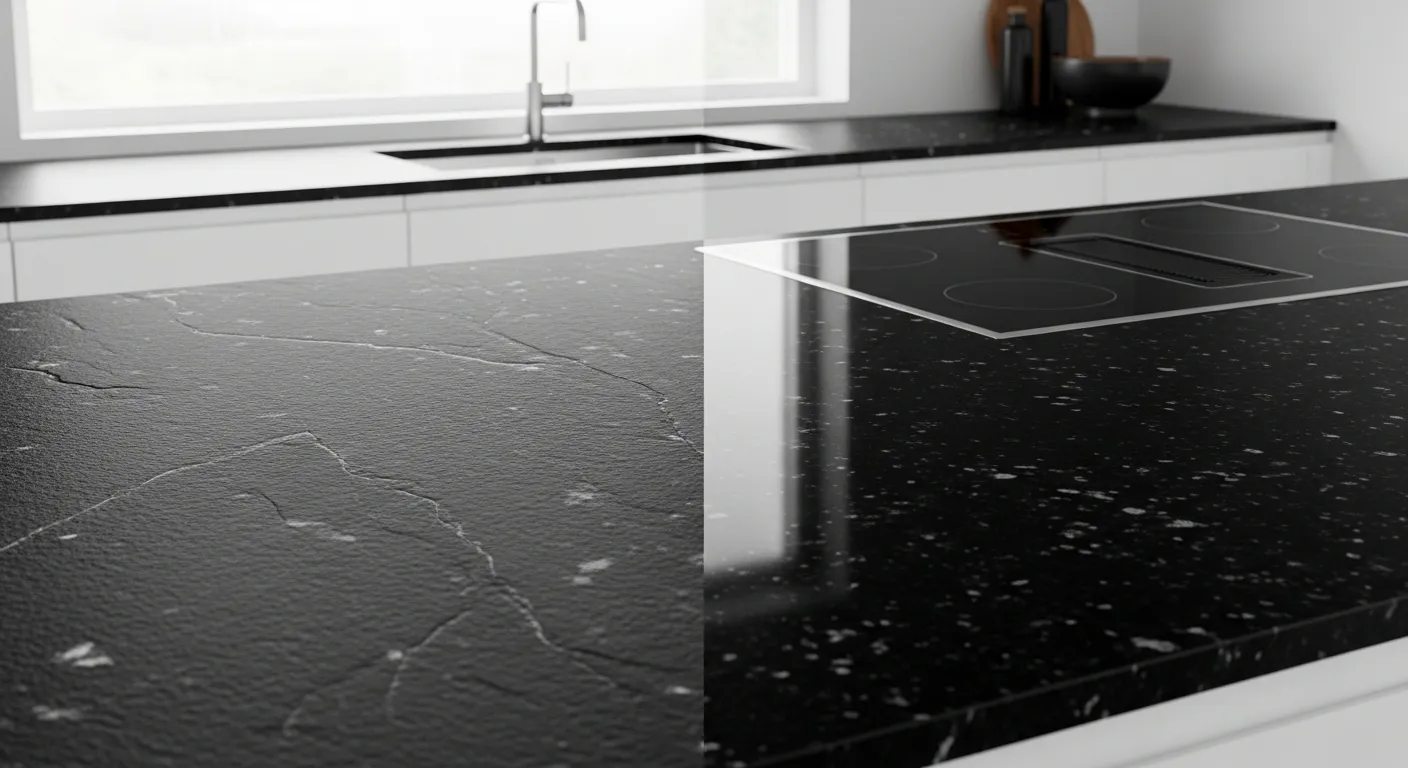
Appearance: Colors appear more muted and natural compared to a polished version of the same stone. Instead of a mirror finish, you get a subtle, low sheen that highlights the granite's mineral composition and organic character. Tiny flecks and crystals that disappear under polish become visible and interesting.
Maintenance: The textured surface hides fingerprints, water spots, and everyday smudges far better than polished granite. It also tends to mask minor scratches over time. For households where countertops see heavy daily use, that forgiving quality is a real advantage.
Best For: Farmhouse, rustic, contemporary, and industrial kitchens. Leathered granite adds depth and earthiness to a space. It works especially well alongside natural wood tones, concrete accents, and matte-finish fixtures.
The feel is slightly rough and organic. Many homeowners describe it as warm and inviting, a surface you actually want to touch.
Leathered vs. Polished: A Side-by-Side Comparison
Now that you know what each finish looks and feels like, here's how they stack up across the factors that matter most when you're making a decision.
Durability: Both finishes are equally durable because the underlying granite is identical. Granite ranks around 6 to 7 on the Mohs hardness scale, making it highly resistant to scratching and chipping regardless of surface treatment. The difference between leathered and polished is purely surface-level.
Stain Resistance: Polished granite holds a slight advantage here because the polishing process tightens the stone's pores. Leathered granite still performs well when properly sealed. Both finishes benefit from periodic resealing, typically every one to two years depending on use and the specific stone.
Fingerprints and Smudges: Leathered granite wins this one decisively. The textured surface conceals everyday marks that become highly visible on polished stone, particularly in dark colors like Black Pearl or Absolute Black.
Light and Space: Polished granite reflects light and can make smaller kitchens feel more open and airy. Leathered granite absorbs light, which creates a cozier, more grounded atmosphere. Neither effect is better; it depends on what your kitchen needs.
Color Presentation: A polished finish deepens and saturates color, making veining and patterns bold. A leathered finish softens and mutes color, sometimes revealing mineral flecks that are completely invisible in the polished version of the same slab.
Cost: Leathered finishes can cost slightly more because the finishing process is more labor-intensive, involving multiple steps and specialized tooling. Pricing varies by region and fabricator, so always request quotes for both options.
Some homeowners exploring granite options also weigh natural stone against engineered alternatives. For those interested in consistency and low-maintenance appeal, countertops made of quartz offer a different set of benefits worth considering alongside granite. The comparison often helps clarify what matters most to you: the one-of-a-kind character of natural stone or the uniformity of an engineered surface.
How to Choose the Right Finish for Your Kitchen
Choosing between leathered and polished granite doesn't have to feel overwhelming. A few practical considerations can narrow the decision quickly.
Think about your kitchen's lighting. Kitchens flooded with natural light can handle either finish beautifully. If your kitchen runs darker or relies heavily on artificial lighting, the reflective quality of polished granite can help bounce light around the room and open things up.
Think about your lifestyle. Busy households with kids, frequent cooking sessions, and countertops that double as homework stations may appreciate leathered granite's forgiving surface. You won't spend your evenings chasing fingerprints with a microfiber cloth. On the other hand, if you prioritize a sleek, formal aesthetic and don't mind a bit more upkeep, polished granite delivers that refined look consistently.
Think about your cabinets and decor. Polished granite pairs naturally with glossy or painted cabinetry for a cohesive, put-together feel. Leathered granite works well with natural wood, open shelving, or matte-finish cabinetry, creating a layered, textural look that feels intentional and lived-in.
Think about the granite color itself. Darker granites show fingerprints dramatically when polished; leathering these colors is a popular workaround. Lighter granites like White Ice or Colonial White tend to look stunning in a polished finish because the gloss enhances their subtle veining without the fingerprint problem.
Here's a tip that sounds simple but makes a real difference: request finish samples from your stone fabricator and view them in your actual kitchen lighting before committing. Showroom lighting rarely matches what you have at home, and a slab that looked perfect under fluorescent lights can read very differently next to your cabinets and backsplash.
The decision between finishes is just one piece of a larger kitchen renovation puzzle. Exploring different materials, layouts, and decor ideas helps you build a cohesive vision where every element works together.
Caring for Leathered and Polished Granite
Both finishes share the same basic care routine. Use a pH-neutral stone cleaner for daily wiping. Avoid acidic products like vinegar or lemon-based sprays, and skip anything abrasive. Wipe up spills promptly, especially oil, wine, or citrus. Reseal your countertops periodically to maintain protection.
For polished granite specifically, a microfiber cloth is your best friend. It maintains the shine without leaving streaks. Expect to wipe down polished surfaces more frequently if you want them looking their best, particularly on dark-colored stone.
Leathered granite has its own quirk: the textured surface can trap crumbs or residue in its grooves. A soft brush or a damp cloth handles daily cleaning easily. Some homeowners find that a slightly more thorough weekly wipe-down keeps the texture looking fresh.
With proper care, either finish will look beautiful for decades. Granite is remarkably resilient, and the finish you choose won't change that fundamental durability.
Final Thoughts
Polished granite delivers brilliance, depth, and a classic look that has anchored beautiful kitchens for generations. Leathered granite offers warmth, texture, and everyday practicality that fits the way many of us actually live. Neither finish is objectively better. The right choice depends on your kitchen's style, your daily routine, and what feels right when you run your hand across the stone.
If you haven't already, visit a local stone yard and touch both finishes in person. See how they interact with different colors. Pay attention to how each one catches (or absorbs) the light. That hands-on experience will tell you more than any article can.
Kitchen countertops are just one element of a well-designed home, and there is always more to discover. Whether you are refreshing a single space or planning a full renovation, exploring additional home and design coverage on dwellect.com can spark fresh ideas for the next part of your project.
