

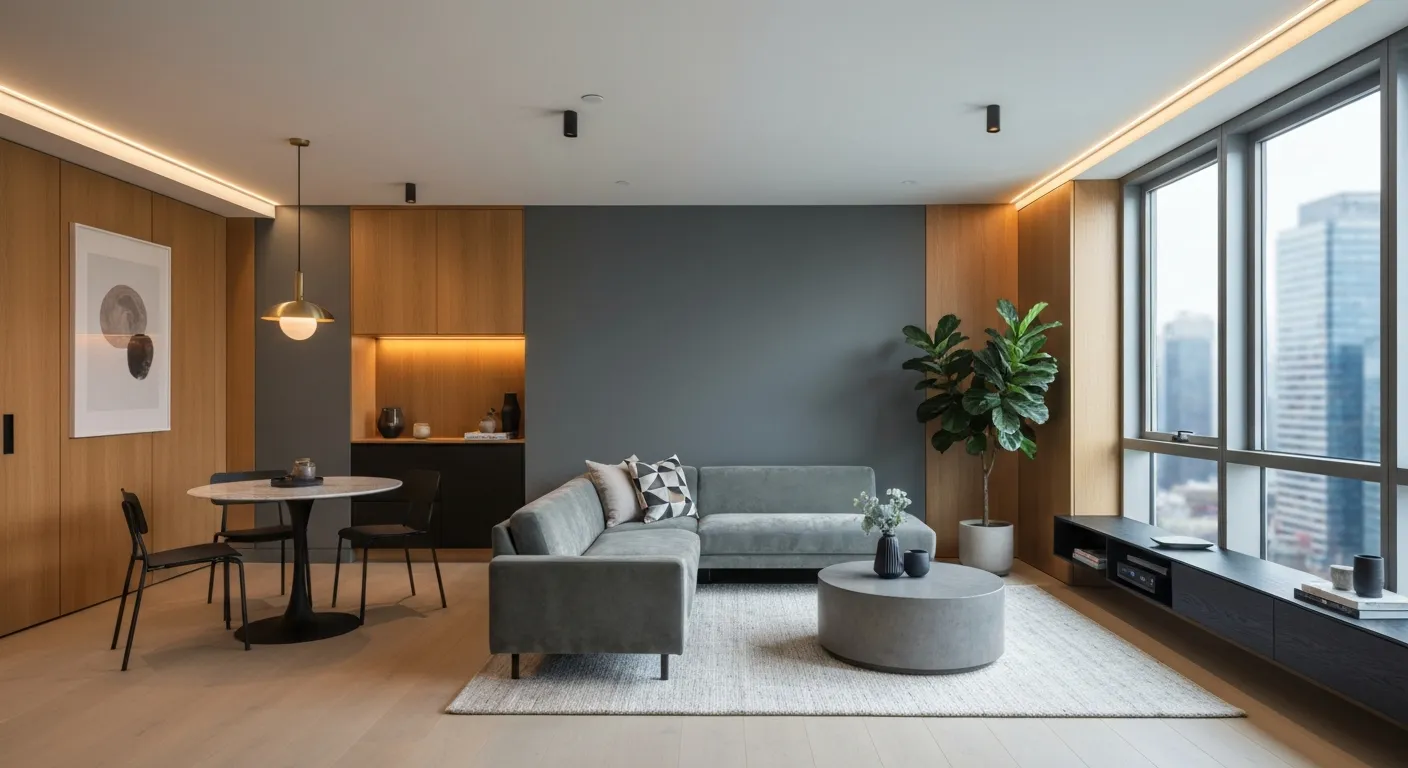
I once walked into a 280-square-foot serviced unit in Wan Chai and thought no one could live there for a month. The ceiling felt low, the bathroom smelled damp, and traffic noise slipped through the window frame.
Six weeks later, after a focused interior refresh, the same unit scored 4.8 stars and landed a three-month corporate booking.
That is what thoughtful design can do in Hong Kong. You are working with tiny footprints, annual mean relative humidity near 78 percent, constant street noise, and short gaps between guests.
The good news is simple. A few smart changes can make a unit feel calmer, cleaner, and much easier to run.
Key Takeaways
Before diving in, this home design resource is a helpful companion for broader planning. The moves below are the ones that pay off fastest in a compact unit.
- Layer lighting with intent. Cool light supports work, and warm light helps guests wind down.
- Zone the room without walls. Built-ins and fold-down pieces separate tasks without wasting space.
- Handle noise early. Better seals, curtains, and soft finishes support deeper sleep.
- Stay ahead of humidity. Moisture control protects finishes and keeps the air healthier.
- Pick durable surfaces. Easy-clean materials shorten turns and reduce repair calls.
- Track results. Reviews, cleaning time, and average stay length show what worked.
What Serviced Apartments Actually Need From Interior Design
Design works best when it solves daily living, fast turnover, and tight space at the same time.
A serviced apartment sits between a hotel room and a long-term home. Guests stay for weeks or months, so they cook, work video calls, store luggage, and try to rest well in the same small footprint.
That changes the brief. Surfaces must survive repeated deep cleans, storage has to be built in, and the layout needs to support both workdays and quiet nights.
- Stay patterns can run from two weeks to six months, so comfort and durability both matter.
- Self-service is now expected. In an Oracle Hospitality survey, 53.6 percent of travelers said they want contactless check-in and check-out to remain.
- Hong Kong space is tight. Recent census data puts the median per-capita floor area at about 172 square feet.
Once you see those limits clearly, the goal is not decoration. It is creating a space that works harder every day.
Three Big Benefits of Design-Led Upgrades
Good design should improve guest comfort, team speed, and pricing power at the same time.
Better Sleep and Better Reviews
Sleep is where small design errors show up fast. The World Health Organization recommends bedroom noise below 30 dB(A) at night, so better blackout, softer finishes, and tighter seals can reduce the review comments that hurt your score.
Faster, Smoother Operations
When storage is planned and surfaces resist scuffs, housekeeping moves faster. Your team wastes less time deciding where things go, and maintenance tickets drop because the room was built for frequent use.
More Revenue Confidence
Design upgrades can support rate and occupancy, not just nicer photos. A Cornell Hospitality Quarterly study of 305 renovation projects found short-term gains in revenue, profitability, and guest satisfaction after renovation spending.
What to Implement: Small-Space Moves With Big Impact
The best upgrades are practical, quick to install, and easy for your team to maintain.
Start with the changes guests notice within the first day of a stay. For compact units with custom joinery, awkward floorplates, or damp bathroom corners, briefing an experienced interior design studio early helps you avoid layout mistakes that cost more to fix later. A clear brief on humidity, noise sources, and storage needs saves time on both sides.
Layer the Light for Day and Night
Place desks near natural light first. Then add ambient light for the room, task light for work, and softer accent light for evenings. Use 4000K to 5000K in work zones and 2700K at night so the room feels alert by day and calm before bed.
LED lighting also cuts running costs. It uses at least 75 percent less energy than incandescent bulbs and lasts far longer, which means fewer replacements between stays.
Design for Sleep and Sound
Quiet rooms feel more expensive, even when the footprint is small. Add door sweeps, perimeter seals, heavier curtains, and a soft headboard wall with acoustic panels rated around NRC 0.7 to 0.9. NRC means noise reduction coefficient, which is a simple measure of how much sound a surface absorbs.
Tame Humidity and Improve Air
Moisture control is not optional in Hong Kong. The CDC advises keeping indoor humidity at or below about 50 percent to help control mold, so vent bathroom fans outside, run dehumidifiers between stays, and choose finishes that can handle damp air.
If you can upgrade filtration, do it. MERV 11 is a filter rating that catches finer particles than basic filters and can help the room feel fresher.
Right-Size Storage and Flow
Good storage makes a small unit feel twice as usable. Aim for wardrobes about 600mm deep, full-height pull-outs where possible, and an entry setup with a shoe drawer and umbrella drip tray. Keep main walkways around 750mm wide so the room still feels easy to move through.
Choose Flexible Furniture
One room may need to handle sleeping, dining, calls, and lounging in a single day. Fold-down desks that are close to about 12 to 16 centimeters, nesting tables, lift-up bed bases, and sofa beds all help without crowding the floor.
If you use wall beds, check the hardware. A gas-lift rating above 800N and proper anti-tip fixing are basic safety steps, not extras.
Use Durable, Cleanable Surfaces
Pick finishes that look good after dozens of turnovers. Commercial-grade LVT, which stands for luxury vinyl tile, quartz worktops, washable paint, and slip-resistant bath tiles are reliable choices because they clean quickly and hide wear better than softer materials.
See Design-Led Serviced Stays in Action
Strong design is easy to spot because the room feels settled within minutes of arrival.
Look for clear zones, hidden storage, calm lighting, and a quieter sleep area even when the building sits on a busy street. Those choices make guests more likely to extend a stay because daily routines feel easier.
If you want a design-forward example after seeing how clear zones, hidden storage, calm lighting, and quieter sleep areas make routines easier and encourage longer stays, The V shows how thoughtful layouts, finishes, and services create a more settled guest experience with flexible daily living and smoother arrivals in a serviced apartment Hong Kong for relocation stays.
When to Bring in a Pro
A professional is worth it when the room needs custom problem-solving, not just new styling.
Bring in help if your unit has an awkward floorplate, damp bathroom corners, built-in furniture needs, or code and safety questions. These jobs usually cost more when they are guessed at first and corrected later.
Before you ask for proposals, prepare a short brief with unit types, humidity readings, major noise sources, must-keep items, target launch date, and your capital budget. A clear brief saves time on both sides.
What to Track Post-Launch
Numbers will tell you whether the refresh changed the stay experience or only changed the photos.
Set a baseline 30 days before the upgrade, then compare results again at 30 and 90 days after launch.
- Average review score and sleep-related comments.
- Maintenance tickets per occupied month.
- Energy cost per stay.
- Cleaning minutes per turn.
- Average stay length.
- ADR, or average daily rate, and occupancy shifts.
When those numbers improve together, you know the design is helping both guests and operations.
Risks and Quick Fixes
Most weak results come from a few repeat mistakes that are easy to catch early.
- The evening light is too blue. Fix: switch to 2700K scenes after 7 p.m.
- Curtains leak light at the edges. Fix: add side channels or magnetic strips.
- Rugs slide on hard floors. Fix: install non-slip underlays right away.
- Bathroom exhaust is too weak. Fix: match the fan to room size and vent outside.
- Tall or fold-out furniture is not anchored. Fix: install anti-tip kits on every piece that needs one.
If you need more tailored detailing, specialist planning will usually beat guesswork once layouts, storage, humidity control, and finishes all start interacting.
Conclusion
Small, focused upgrades can make a compact unit feel generous while making operations easier.
You do not need a full gut renovation to see results. Start with paint, blackout control, warm evening lighting, better seals, smarter entry storage, and a dehumidifier schedule. Once review scores and stay length begin to move, you can expand into bigger lighting, acoustic, and storage upgrades with more confidence.


