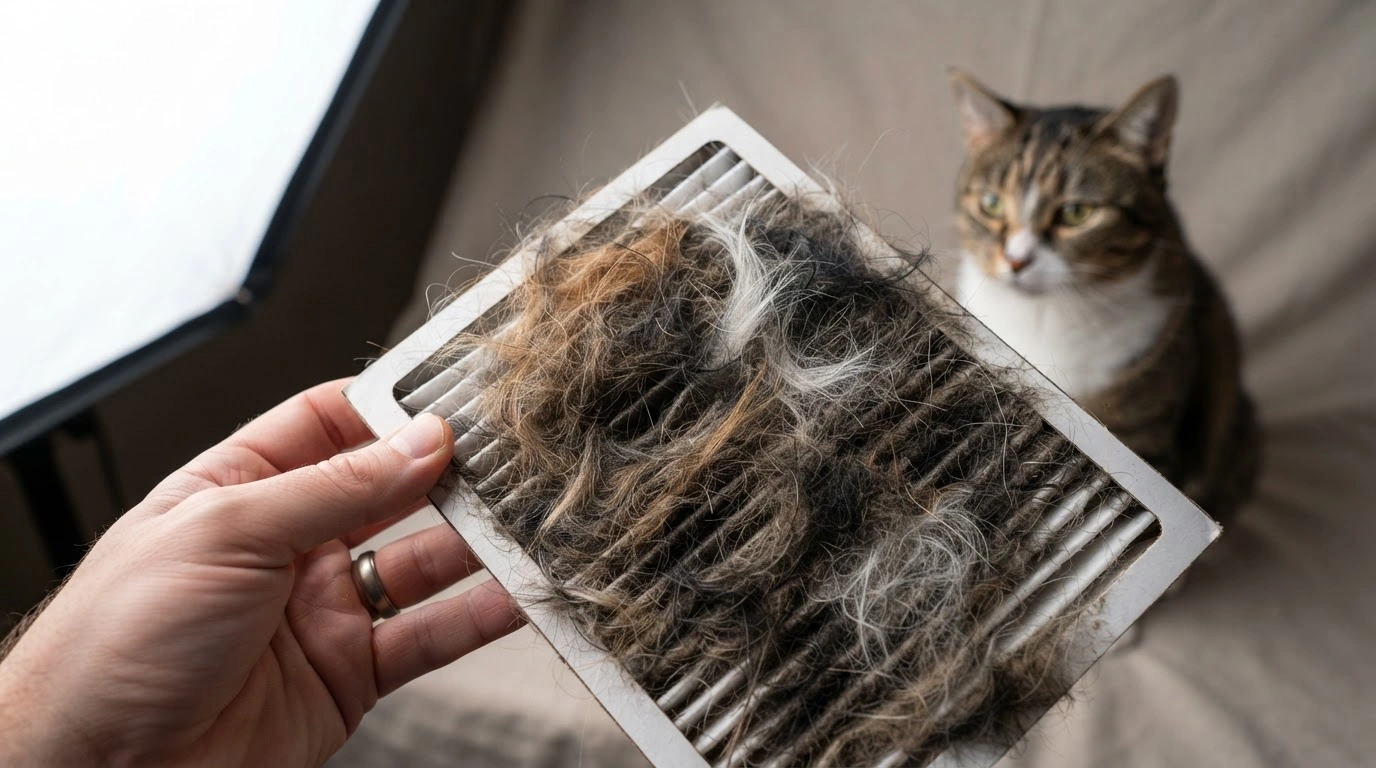
If you have a dog or a cat in the house, you’ve probably seen it. Hair on the carpet, hair on your clothes, bits of hair floating around the floor in tiny tumbleweeds. But you only deal with about half the problem caused by pets. The other half is currently infiltrating your heating and cooling system. It collects in the filters, builds up on the coils and is slowly costing you money.
I’ll show you how to prevent pet hair from turning your heating and cooling system into a dust bunny. I’ll also show you which pets are most likely to cause this ongoing issue.
Why Pet Hair Is So Hard on Your HVAC System
Whether your heating and cooling system is running constantly or cyclically, it is always drawing air through your house and picking up whatever is present in the air, including pet dander and hair. Accumulation of this hair can:
- Cause air filters to become clogged more rapidly in pet owned homes than in pet free homes, restricting airflow and causing the HVAC system to have to work harder
- Accumulate on the evaporator coils and blower parts decreasing efficiency and increasing the risk of system failure
- Accumulate in the duct work where it can combine with moisture and dust to promote growth of bacteria and mold
- Exacerbate allergies and asthma by circulating pet hair and dander throughout the house
Fortunately, there are a few steps that can be taken to manage this issue without the need for extensive system modifications.
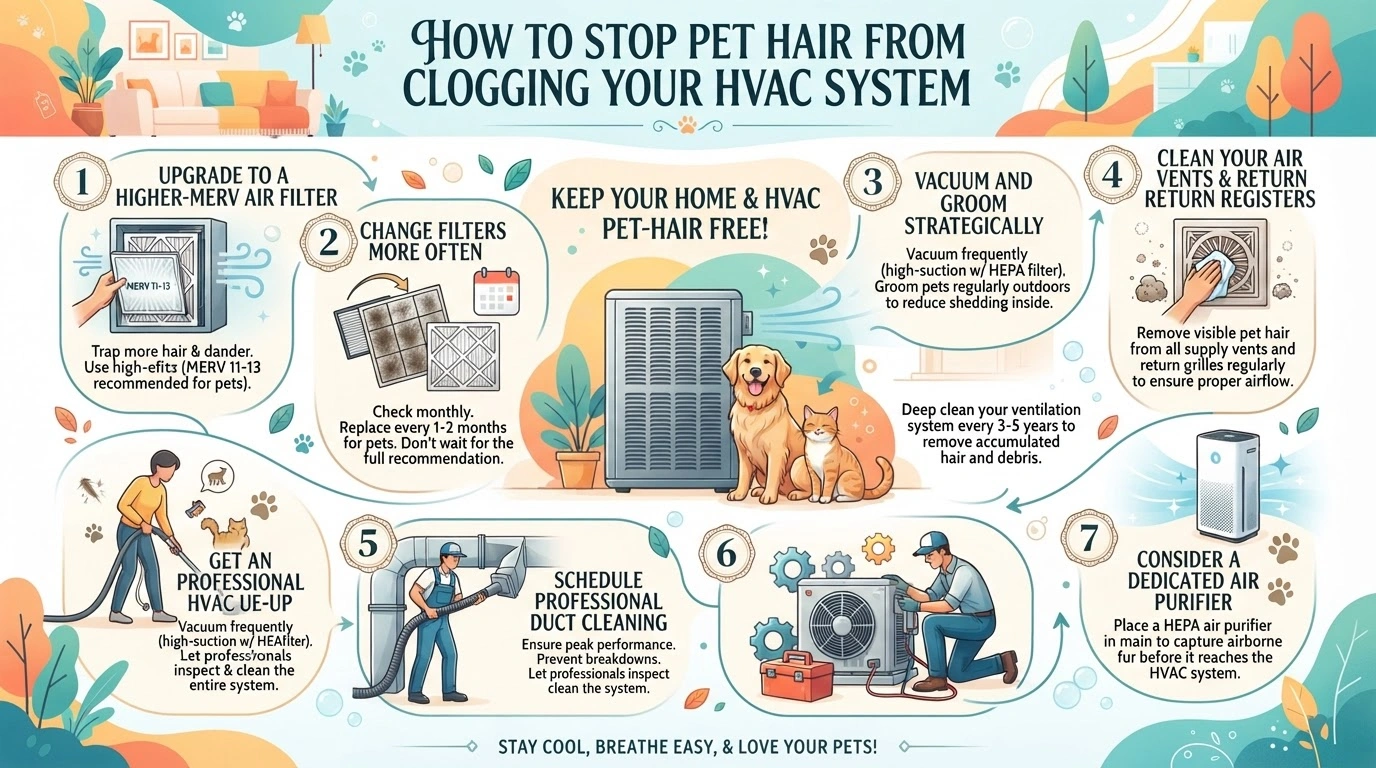
1. Upgrade to a Higher-MERV Air Filter
Standard fiberglass filters are inexpensive, but tend to allow a high amount of pet dander and hair to pass through. Please consider purchasing a pleated filter sized MERV 8 to MERV 11. This will be high enough to filter out pet dander and hair, but not so high as to restrict the airflow through your system (MERV values 16 and higher are generally not needed in residential systems and may actually result in decreased system efficiency unless your system is specifically designed for such a high MERV filter).
2. Change Filters More Often Than the Box Recommends
Most filter packaging assumes a pet-free household. If you have a shedding dog or cat, cut that timeline in half:
- No pets: every 90 days
- One pet: every 60 days
- Multiple pets or heavy shedders: every 30–45 days
Set a recurring phone reminder — a clogged filter is one of the most common (and most preventable) causes of HVAC strain.
3. Vacuum and Groom Strategically
Less hair in your home means less hair in your vents. This is also worth keeping in mind if you’re getting ready for a new litter, as keeping the surrounding area clean can help reduce loose hair, dust and dander around mum and her puppies.
- Vacuum floors and furniture at least twice a week with a vacuum that has a good HEPA filter
- Brush your pet regularly either in an interior room without a return air vent or outside
- Clean baseboards and vent covers once a week. Hair loves to accumulate on these surfaces and then be sucked into the system
4. Clean Your Air Vents and Return Registers
Return air vents are also a significant source of hair entering the system. They suck in air (and hair) through the ducts. Every 2 to 3 months perform the following:
- Clean vent covers and the opening in the duct by removing and vacuuming
- Loosened embedded hair using a soft brush attachment before vacuuming
- Washable vent filters provide a first line of defense before the air enters your actual filter
5. Schedule Professional Duct Cleaning
Despite diligent filter replacement, some hair and dander will inevitably get into your ducts over time. Having professional duct cleaning every 2-3 years (more frequently if you own multiple pets) will assist your system by removing deposits that cannot be effectively managed through routine cleaning alone.
6. Get an Annual HVAC Tune-Up
Have a technician inspect and clean your blower motor, coils, and internal components once a year. Pet hair and dander tend to accumulate on evaporator coils, which reduces cooling efficiency and can lead to costly repairs if ignored.
7. Consider a Dedicated Air Purifier
A standalone HEPA air purifier in high-traffic rooms reduces the amount of loose hair and dander circulating before it ever reaches your HVAC intake. This is especially useful in homes with heavy shedders or multiple pets.
Dog and Cat Breeds Known for Heavy Shedding
If you're dealing with more hair than usual, your pet's breed may be a big part of the equation. Some breeds have coats built for shedding seasonally or year-round, which means more maintenance for both your home and your HVAC system.
Dog breeds that shed heavily:
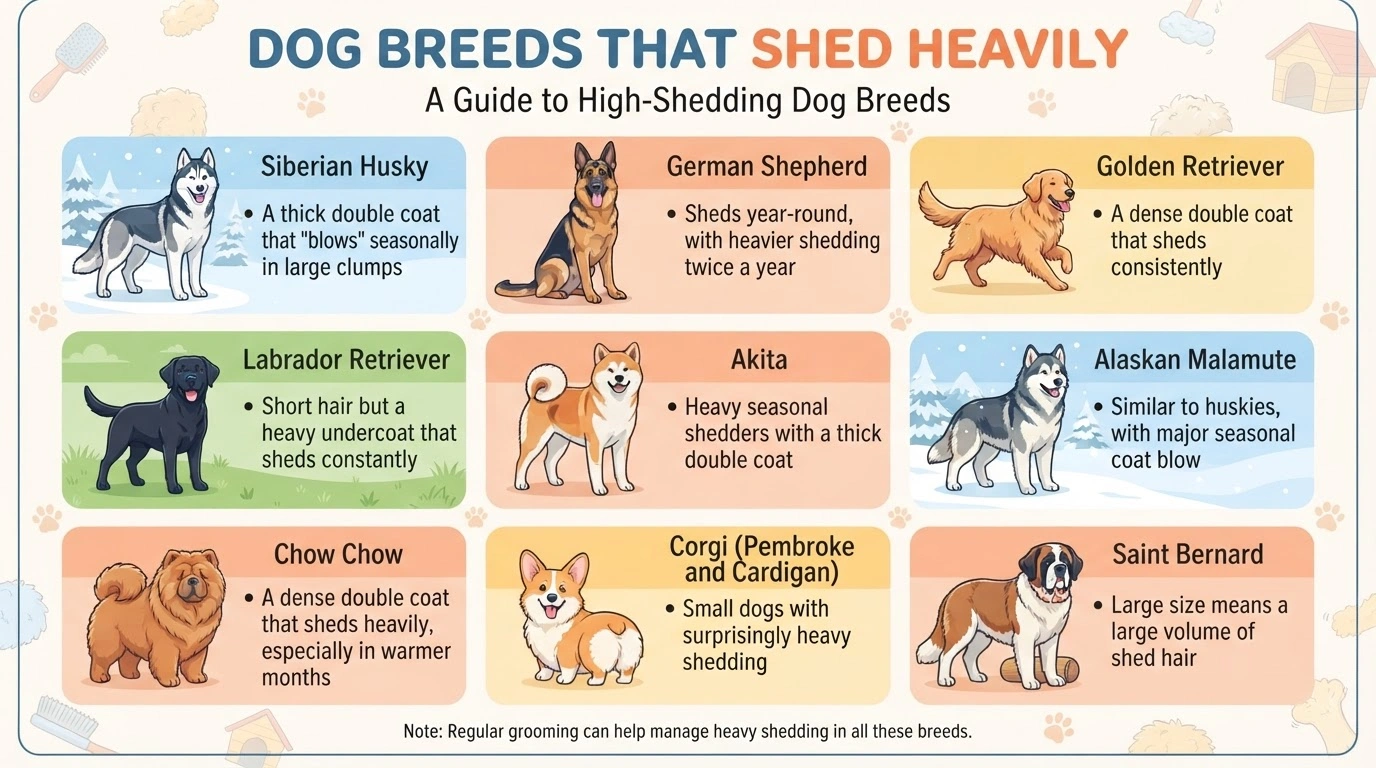
- Siberian Husky – a thick double coat that "blows" seasonally in large clumps
- German Shepherd – sheds year-round, with heavier shedding twice a year
- Golden Retriever – a dense double coat that sheds consistently
- Labrador Retriever – short hair but a heavy undercoat that sheds constantly
- Akita – heavy seasonal shedders with a thick double coat
- Alaskan Malamute – similar to huskies, with major seasonal coat blow
- Chow Chow – a dense double coat that sheds heavily, especially in warmer months
- Corgi (Pembroke and Cardigan) – small dogs with surprisingly heavy shedding
- Saint Bernard – large size means a large volume of shed hair
Cat breeds that shed heavily:
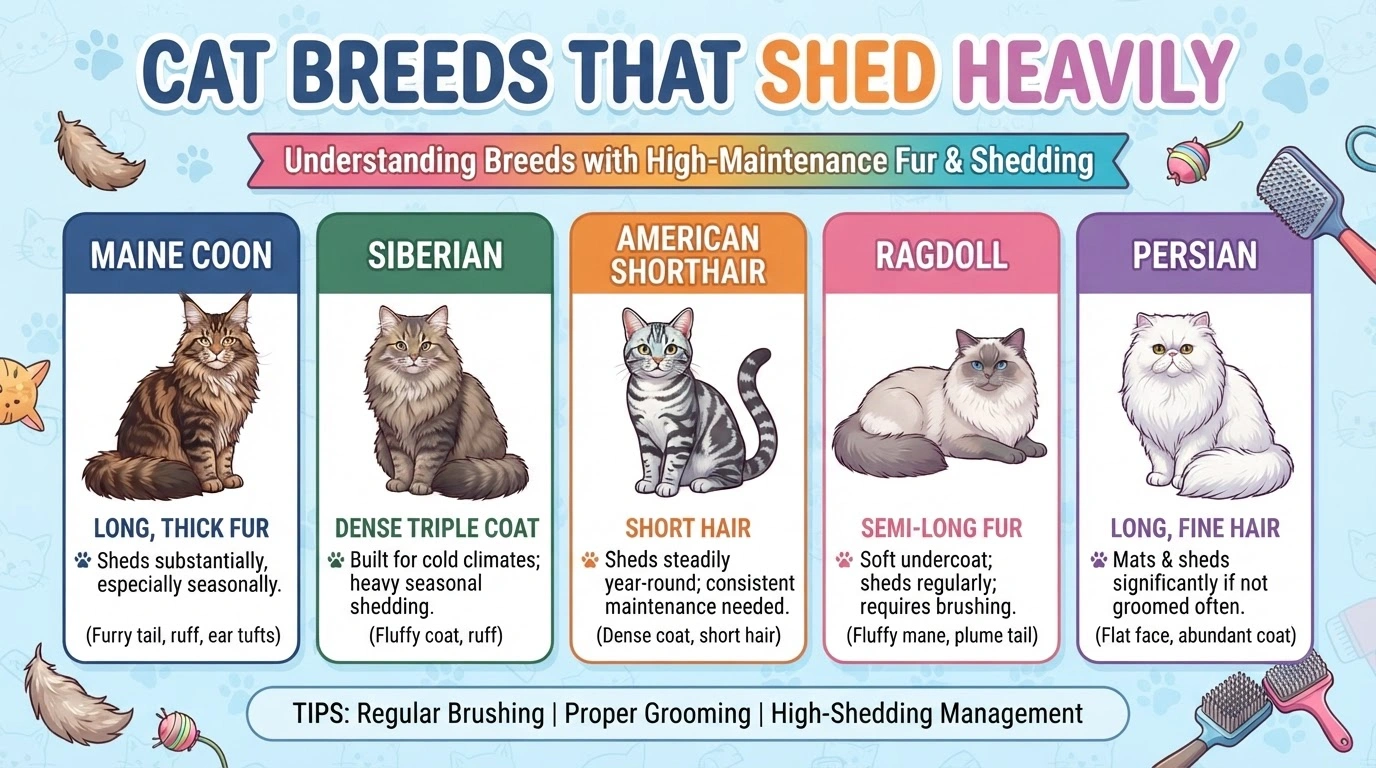
- Maine Coon – long, thick fur that sheds substantially, especially seasonally
- Siberian – a dense triple coat built for cold climates
- American Shorthair – short hair but sheds steadily year-round
- Ragdoll – semi-long fur with a soft undercoat that sheds regularly
- Persian – long, fine hair that mats and sheds if not groomed often
If you have one of these breeds, it's worth leaning harder on the maintenance steps above — more frequent filter changes, more frequent vacuuming, and possibly a lower-interval duct cleaning schedule.
The Bottom Line
Pet hair and your HVAC system don’t have to be adversaries. Simply using the correct filter, establishing a regular maintenance regimen and giving extra care to a high shedding pet, will allow you to maintain clean air and optimal system performance for many years.