

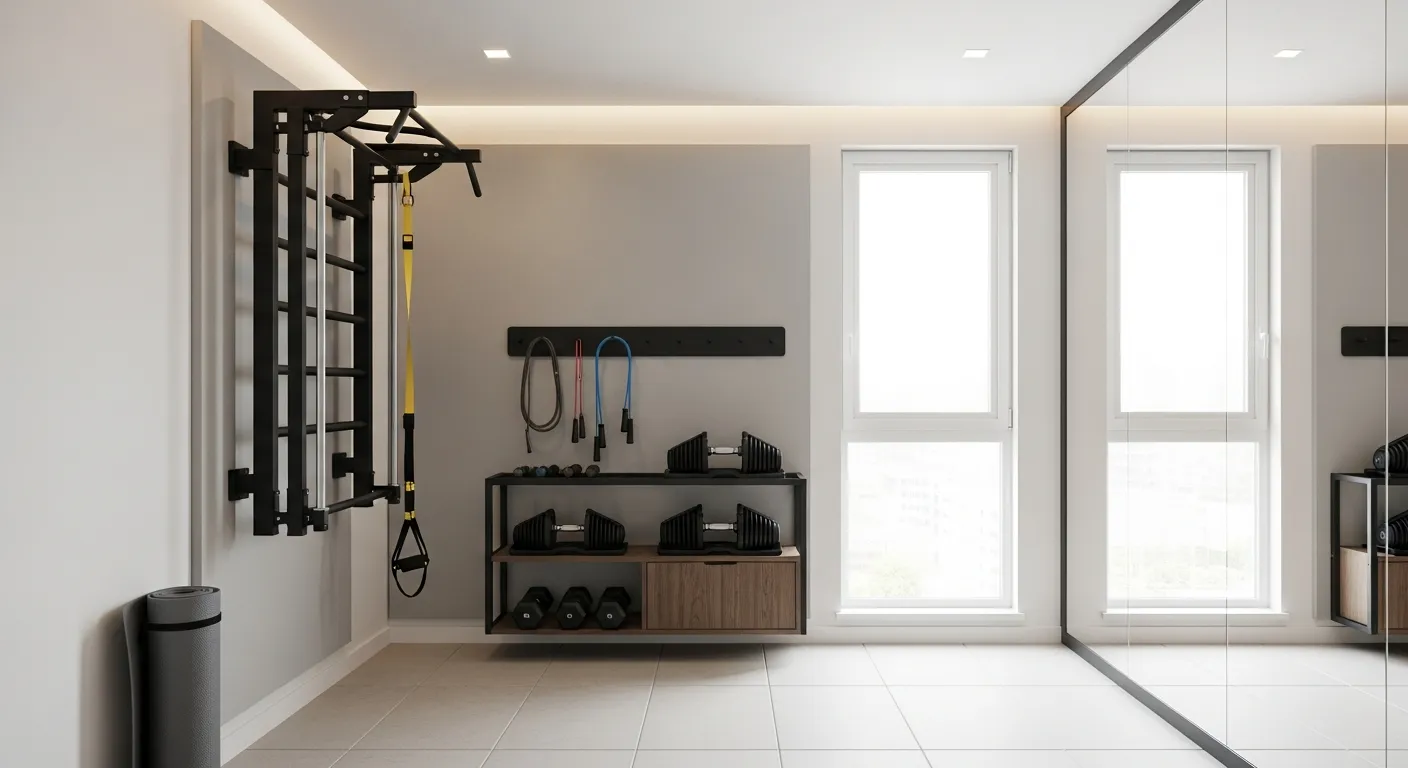
A home workout area should make exercising feel easier, not leave your home feeling cramped or cluttered. However, when you are working with limited square footage, it can be tricky to balance fitness equipment with everyday living space. The key is to think carefully about what you really need, how often you will use it, and where each item will live when your workout is over.
You do not need a full home gym to train effectively. A small corner, spare section of a bedroom, garage area, or living room setup can work well if it is planned properly. With the right approach, you can create a practical workout space that supports strength, cardio, stretching, and recovery without taking over your home.
Choose Multi-Use Equipment
One of the best ways to save space is to avoid buying bulky equipment that only serves one purpose. While large machines can be useful, they are not always realistic for smaller homes. Instead, focus on versatile equipment that allows you to train multiple muscle groups.
Adjustable dumbbells, kettlebells, suspension trainers, and resistance bands are all great examples. They can be used for strength training, mobility work, core exercises, and warmups, yet they take up far less room than a full rack of weights or a large machine.
For example, resistant bands for exercise from Mirafit can be stored in a drawer, basket, or gym bag, making them a practical option for anyone who wants effective training tools without sacrificing floor space.
Use Vertical Storage
When floor space is limited, walls become your best friend. Vertical storage helps keep your workout area clear, organized, and safer to use. Wall-mounted hooks, shelving, pegboards, and storage racks can hold items such as bands, jump ropes, yoga mats, foam rollers, and small weights.
A simple wall rack can make a big difference because it prevents equipment from spreading across the room. It also makes your workout area feel more intentional. When everything has a place, you are more likely to use the space regularly and less likely to skip workouts because the room feels cluttered.
Keep The Floor Clear
Your workout area should have enough open floor space for basic movements such as squats, lunges, pushups, planks, and stretching. Even a small clear area can be highly effective if it is free from furniture, cables, bags, and loose equipment.
Foldable or rollable mats are useful because they can be put away after each session. If your workout area is part of another room, choose a mat that can slide under a bed, behind a sofa, or into a closet. This helps your home return to normal once your workout is finished.
Pick Foldable And Compact Items
If you do want larger fitness equipment, look for compact or foldable designs. Many modern workout benches, rowing machines, exercise bikes, and treadmills are designed with small homes in mind. Some can be folded upright, stored against a wall, or moved with built-in wheels.
Before buying anything, measure your available space carefully. Think about both storage size and workout size. An item may fit neatly in a corner when folded, but it still needs enough room around it when in use. Checking this first can save you from buying equipment that feels awkward or inconvenient later.
Create Zones Within The Room
Even in a small area, zoning can make your workout space feel more efficient. You might have one corner for strength equipment, one basket for accessories, and one open floor area for movement. This does not require much space, but it helps create order.
If your workout area is in a shared room, use visual boundaries. A mat, small shelving unit, or storage basket can help define the space without needing walls or partitions. This makes it easier to mentally switch into workout mode while still keeping the room usable for other purposes.
Avoid Overbuying
It is easy to get excited when setting up a home gym, but too much equipment can quickly make a small space feel cramped. Start with the essentials and build slowly. Consider what types of workouts you actually enjoy and what equipment you will use consistently.
A compact setup might include a mat, resistance bands, adjustable weights, a skipping rope, and a bench. For many people, that is enough to support strength training, cardio, mobility, and recovery. You can always add more later once you know what your routine needs.
Make It Easy To Tidy Away
The easier your workout area is to reset, the more likely you are to keep using it. Use baskets, storage boxes, wall hooks, or a small cabinet so everything can be packed away in minutes. This is especially important if your gym space is in a living room, bedroom, or office.
A tidy setup also helps protect your equipment. Bands, mats, and weights are less likely to get damaged when they are stored properly, and you will spend less time searching for what you need before each workout.


