

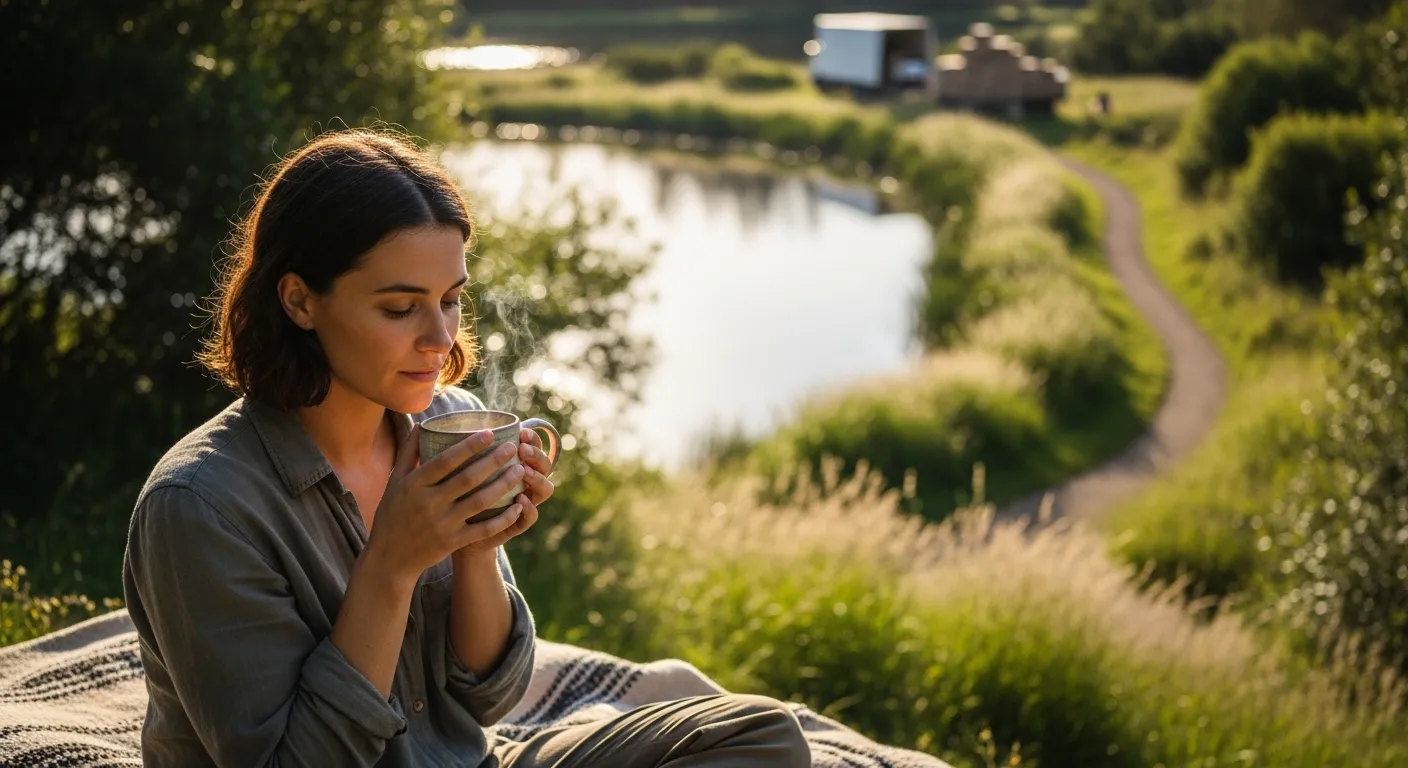
Start With a Simple Plan, Not a Packed Schedule
A low-stress day outdoors should feel like a gentle exhale, not another calendar obligation wearing hiking shoes. The goal is not to see everything, walk the longest route, or squeeze five stops into one afternoon. The goal is to create a day that feels easy from the moment you leave home: water nearby, trees overhead, a trail that does not punish you, and good coffee somewhere along the way.
The best version of this kind of day has a loose shape. You start with caffeine, move your body without rushing, sit near water long enough to feel your shoulders drop, and leave before the outing turns into a chore. It is part walk, part reset, part tiny local escape.
Why this works
A simple plan leaves room for mood, weather, and energy. When the day is not overplanned, small pleasures have more space to happen naturally.
Choose the Water First
Water gives the day its center. It could be a lake, a river, a pond, a reservoir, or a quiet waterfront path. What matters is not the size of the water, but the feeling it creates. Still water slows the pace of the day. Moving water adds sound and energy. A shaded shoreline gives you somewhere to pause without needing a formal destination.
Choose a place where you can walk near the water rather than only look at it from a distance. A trail with changing views keeps the day interesting, especially if it includes benches, bridges, tree cover, or open spots where the light hits the surface.
Why this works
Water makes an ordinary walk feel more restorative. It gives your eyes a place to rest and turns even a short route into something scenic.
Pick a Trail That Matches Your Energy
A low-stress day does not need a difficult trail. In fact, the best route is usually one that feels inviting rather than impressive. Look for a trail that is long enough to feel like an outing, but not so demanding that it controls the whole day.
A good choice might be a loop around the water, a flat riverside path, a shaded park trail, or a route with gentle elevation and plenty of places to stop. If you are going with someone else, choose a trail that allows conversation. If you are going alone, choose one that feels safe, visible, and easy to follow.
Why this works
The right trail gives the day movement without pressure. You finish feeling refreshed, not drained, which is the whole point.
Let Coffee Set the Tone
Good coffee can turn a basic outdoor plan into a ritual. Start the day at a café near your route, or bring something warm in a travel cup and drink it by the water. Coffee gives the outing a soft beginning. It creates a pause before the walking starts and makes the day feel intentional without needing much effort.
If you are choosing a café, look for one close enough to the trail that you do not spend the day driving between stops. A small local café with pastries, breakfast sandwiches, or outdoor seating can become part of the experience rather than just a supply stop.
Why this works
Coffee adds comfort and rhythm. It gives the day a lifestyle feel rather than making it only about exercise.
Think Like a Local, Not a Tourist
The best low-stress outdoor days often happen in places that locals return to again and again. They are not always the most dramatic spots, but they are reliable. They have easy parking or transit access, familiar paths, decent restrooms, nearby food, and enough beauty to make the day feel worthwhile.
People in Seattle might build a day around Green Lake or Lake Washington. In Minneapolis, the Chain of Lakes makes it easy to combine walking, water, and neighborhood cafés. In Austin, Lady Bird Lake offers trails, skyline views, and coffee nearby. When looking for lakes in Portland, the same idea applies: choose places that make the day feel calm, accessible, and easy to enjoy rather than chasing only the most photographed view.
Why this works
Local-style planning focuses on comfort and repeatability. The best outdoor places are often the ones you would actually want to visit again.
Pack Light, But Pack Thoughtfully
A relaxed day can become annoying fast if you forget the basics. You do not need a full hiking setup, but you do need enough to stay comfortable. Bring water, sunglasses, sunscreen, a light jacket, and shoes that can handle a trail without making your feet complain halfway through.
If you plan to sit by the water, bring a small blanket or foldable mat. If you like slow afternoons, bring a book, a journal, a camera, or a sketchbook. If you are going out in the rain, assume the ground may be damp and dress accordingly.
Why this works
Thoughtful packing prevents small problems from taking over the day. Comfort makes it easier to stay present.
Built in a Real Pause
Many people plan outdoor days as if the only point is movement. They walk, check the route, finish the loop, and leave. A better low-stress day includes a real pause. Find a bench, a grassy spot, a dock, or a quiet place along the trail where you can sit without checking the time.
This pause is where the day becomes memorable. Watch the water move. Notice the birds. Drink your coffee slowly. Let the walk become more than transportation from one point to another.
Why this works
Rest is not wasted time. It is the part of the day that helps the outdoor setting actually reach you.
Choose Food That Keeps the Mood Easy
Food should support the day, not complicate it. You can plan a picnic, stop at a casual café, or pick up something simple before heading to the trail. The best food for this kind of outing is easy to carry, easy to eat, and not too messy.
Think sandwiches, fruit, pastries, trail mix, sparkling water, or a simple lunch from a nearby market. If the day is chilly, soup or a warm drink afterward can be the perfect ending. If the weather is sunny, a picnic near the water can make the whole outing feel like a mini vacation.
Why this works
Good food turns the day into an experience. It gives you another reason to slow down rather than rush home.
Time the Day Around Light
The mood on an outdoor day changes completely with the hour. Morning gives you quiet paths, cooler air, and the feeling that the day is opening up. Late afternoon brings softer light, warmer colors, and a slower atmosphere. Midday can be fine, but it often brings more people, harsher sun, and less charm.
For the easiest version, start with coffee in the morning, walk before the busiest part of the day, then pause by the water before lunch. If you prefer golden light, start later and end near the water as the sun begins to drop.
Why this works
Good timing makes everything feel smoother. You avoid the worst crowds and get the prettiest parts of the day.
End Before You Are Tired
A low-stress day should end while you still have energy. Leave before the trail feels repetitive, before everyone gets hungry and cranky, and before traffic turns the trip home into the hardest part of the outing.
The best ending might be one last coffee, a casual meal, a short scenic drive, or simply going home with the windows down and your mind quieter than when you left. The point is to protect the feeling you created.
Why this works
Ending well helps the whole day feel successful. You remember the calm, not the fatigue.
Make It a Repeatable Ritual
The beauty of a low-stress day around water, trails, and good coffee is that it need not be rare. Once you find a route, a café, and a rhythm that works, you can return to it whenever life feels too loud.
Over time, this kind of day becomes more than an outing. It becomes a personal reset button. You know where to walk, where to sit, what to order, and how long to stay. That familiarity is part of the pleasure.
Why this works
A repeatable ritual gives you an easy way back to yourself. Sometimes the best escape is not far away, but simply well planned.


