

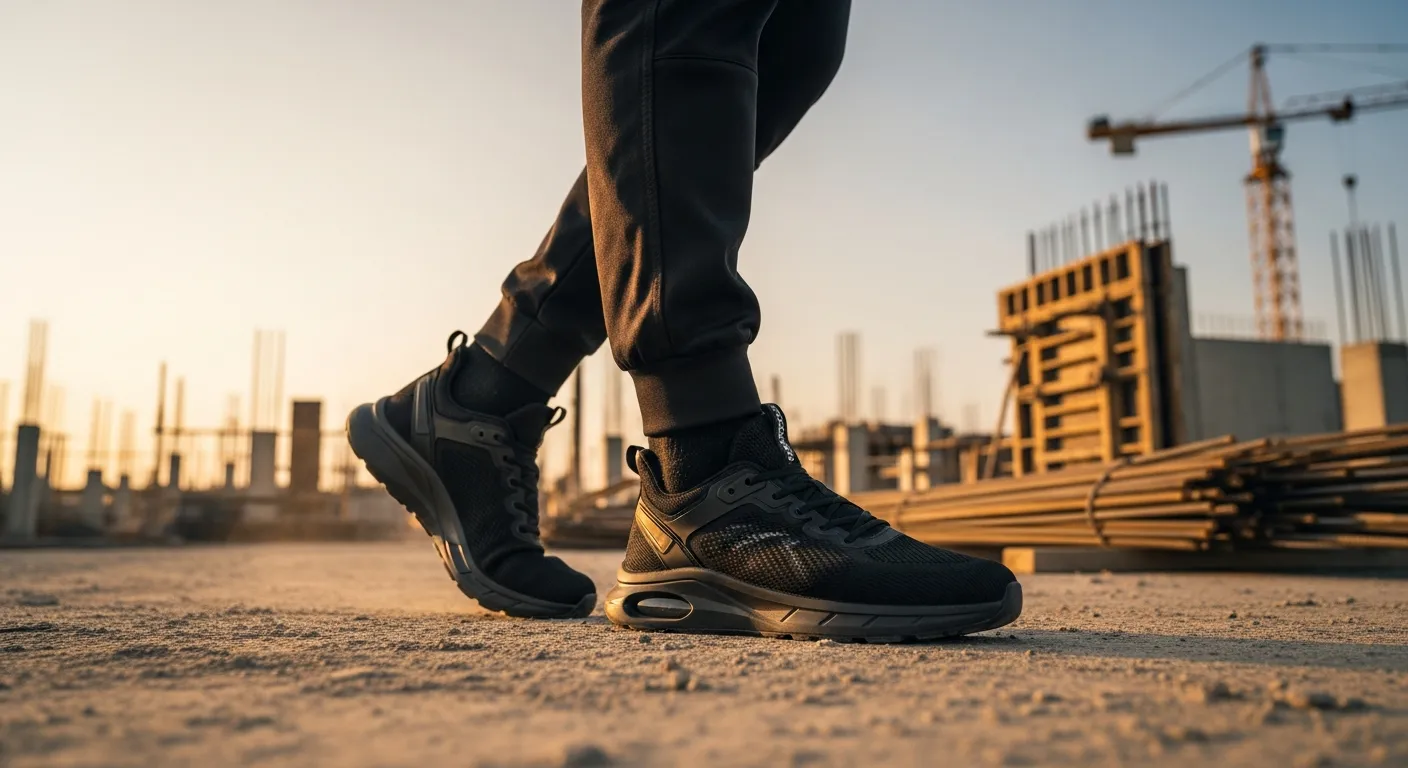
By mid-afternoon on a long shift, your feet know what footwear choices you made at 6 am. Sore arches, tired ankles, the heavy drag of a boot that was fine in the morning — familiar to anyone spending their day on hard surfaces. Foot fatigue and lower limb discomfort are significant contributors to absenteeism and workplace musculoskeletal conditions in Australian industries with high standing-time demands. A quality safety jogger doesn't just feel better — it reduces the cumulative physical load on your lower limbs across the full shift.
Weight: The Most Immediate Difference
A traditional steel cap boot weighs 750g to over 1kg per shoe. A quality safety jogger runs 400g to 550g — a saving of 200- 400 g per foot. Across a 10-hour shift with approximately 8,000 to 10,000 steps, the total cumulative weight reduction lifted by your legs is substantial. Research on occupational footwear shows that each 100g added to a shoe increases the energy cost of walking by approximately 1%. Lighter footwear reduces demand on the tibialis anterior and calf muscles, delaying the onset of lower leg fatigue.
Cushioning Technology
Modern safety joggers draw cushioning technology from athletic footwear — EVA foam midsoles, gel inserts, and dual-density constructions providing energy return underfoot. Traditional safety boots typically use PU midsoles built for durability over cushioning. The difference on hard concrete is immediate and compounds across a full day on an industrial or warehouse floor. The most reliable way to assess cushioning is to walk on a hard surface in the shoe in-store — specs describe technology, but underfoot feel is what matters.
Flexibility and Natural Foot Movement
A traditional safety boot — particularly with a P-rated penetration-resistant midsole — restricts the natural flex of the foot through the ball with each step. When footwear prevents this movement, the body compensates with additional muscular effort. Over a full shift, this increases fatigue in the calf and arch musculature. Safety joggers with flexible construction allow natural foot flexion during walking — reducing cumulative fatigue for roles that don't require the rigidity of a construction boot.
Can a Podiatrist Recommend Safety Joggers for Foot Conditions?
Yes. Occupational podiatrists regularly assess workplace footwear as part of managing foot and lower limb conditions. If you have plantar fasciitis, flat feet, or other conditions affecting comfort in traditional boots, a podiatrist's assessment is worthwhile before switching
For workers looking to reduce end-of-shift foot pain, exploring the safety joggers Australia market with a focus on cushioning technology and weight is a practical starting point the difference between models is best assessed by trying them on.


