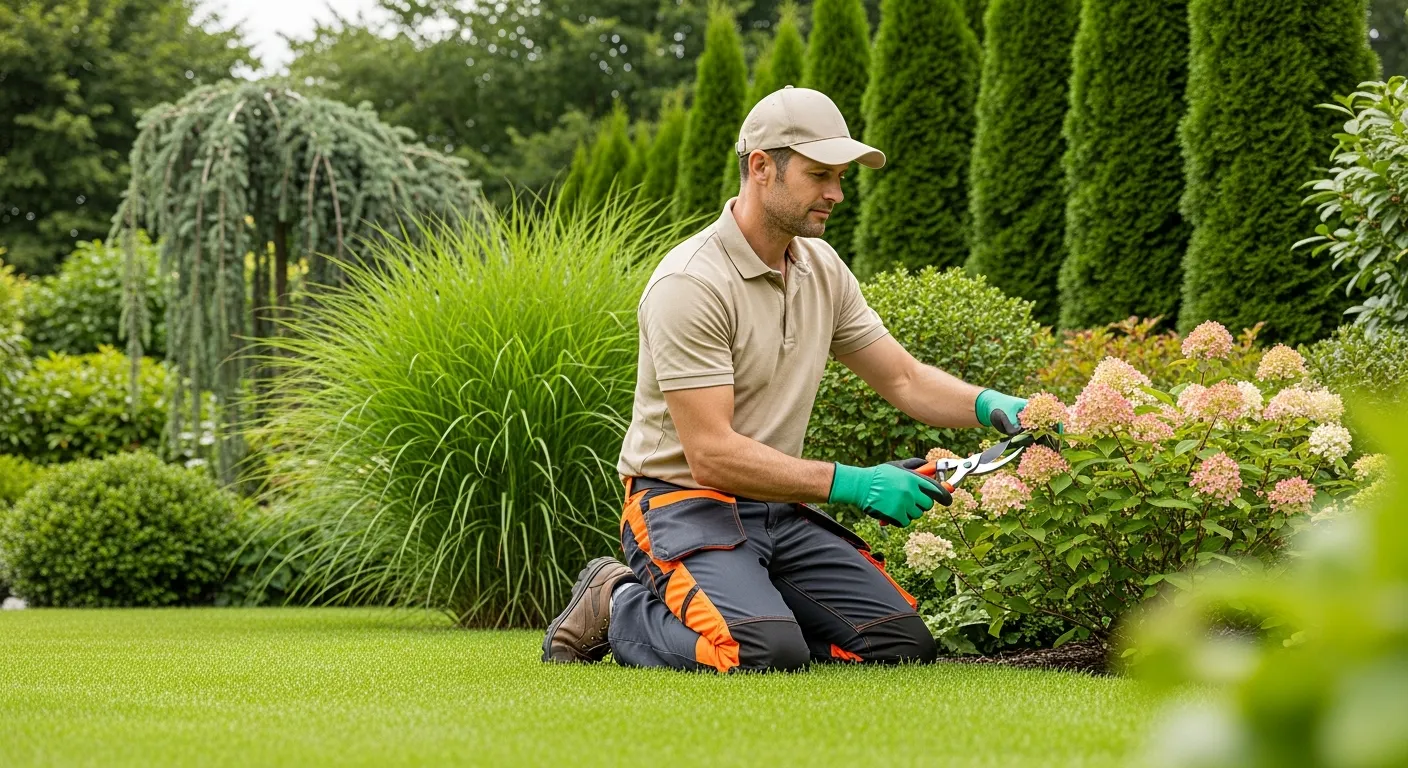
Most homeowners think about trees twice a year: when the leaves need raking and when a branch comes down in a storm.
That passive relationship with your landscape costs money on both ends. Emergency removal fees hit hard when something fails, and lost equity follows when a buyer's inspector notes a canopy full of dead wood, root pressure on the foundation, or poorly placed specimens blocking the home's best architectural features.
Trees are one of the most powerful design elements a property can have. They are also one of the most neglected. The homeowners who manage them proactively, and know when to bring in professionals for work that should never be DIY, consistently hold better-maintained properties and command stronger prices at sale.
The Property Value Case for Proper Tree Care
The data on trees and property value is more compelling than most homeowners realise.
Studies consistently show that mature, well-maintained trees add between five and fifteen percent to a residential property's appraised value. The University of Washington's research found that street trees alone can increase property values by up to ten percent.
The key phrase in all of this is well-maintained. A neglected canopy, a tree with structural damage, or a specimen planted in the wrong location can do exactly the opposite, flagging risk rather than communicating care.
Buyers in design-conscious markets are increasingly looking at a home's landscape as an extension of the architecture, not a backdrop to it. Mature trees that frame the structure, provide shade to living spaces, and create natural privacy screens are seen as genuine assets.
Dead trees, hazardous limbs, and invasive root systems are liabilities that show up in inspection reports and negotiation conversations.
The landscape, trees included, is one of the first impressions a property makes. Pairing strong canopy management with other thoughtful exterior improvements, like those covered in this curb appeal guide, creates a property that reads as genuinely cared for from the street.
Reading Your Canopy: What Healthy Trees Signal to Buyers?
A trained eye, whether it belongs to a buyer's agent, an appraiser, or a home inspector, can tell a great deal about a property's maintenance history from the condition of its trees.
Here is what they are looking at:
Canopy Density and Uniformity: Healthy trees fill their canopy evenly. Sparse sections, die-back at the tips, or asymmetric growth often indicate disease, root stress, or improper pruning.
Trunk Condition: Cracks, cavities, fungal growth at the base, and soft bark are structural red flags. A tree with a compromised trunk is unpredictable in high winds.
Root Zone: Surface roots lifting pavers, foundation proximity, and soil compaction from foot traffic or vehicles are signs that a tree is competing with the built environment around it, and winning.
Limb Clearance: Branches overhanging the roof, touching the siding, or crossing utility lines are not aesthetic issues. They are insurance concerns and potential damage claims.
Deadwood: Dead branches are the most visible and immediately addressable issue in any canopy. They are also among the most common because homeowners simply do not look up often enough.
None of these issues are necessarily fatal for a sale. But they become negotiation points when buyers and inspectors have to account for them. Addressing them before listing removes the uncertainty.
Coastal and Storm-Prone Properties: The Higher Stakes of Tree Management
Coastal regions introduce a specific set of challenges to tree and landscape management that inland homeowners rarely have to consider.
Salt air exposure weakens foliage and accelerates decay in certain species. Seasonal storm systems, particularly the nor'easters and hurricane remnants that move through the Mid-Atlantic coast, test every structural weakness in a canopy that has been left unmanaged.
In waterfront and near-coastal communities, the combination of wind exposure, soft soil conditions from high water tables, and occasional flooding creates conditions where routine professional assessment is not optional. It is a baseline of responsible ownership.
Properties in Hampton Roads, the Chesapeake Bay area, and the surrounding coastal communities of Virginia face all of these conditions regularly. Homeowners in those markets who invest in ongoing tree management typically avoid the emergency call after a storm and the insurance claim that follows it.
For coastal Virginia homeowners specifically, working with qualified professionals who understand regional species, soil conditions, and local storm patterns makes a meaningful difference. An experienced tree service Chesapeake VA team brings local knowledge and technical capability, specifically the ability to assess not just what a tree looks like today, but what it is likely to do under the conditions that region regularly generates.
Designing Around Mature Trees: The Landscape Architect's Perspective
One of the most common mistakes homeowners make during outdoor renovation projects is failing to plan around their existing trees.
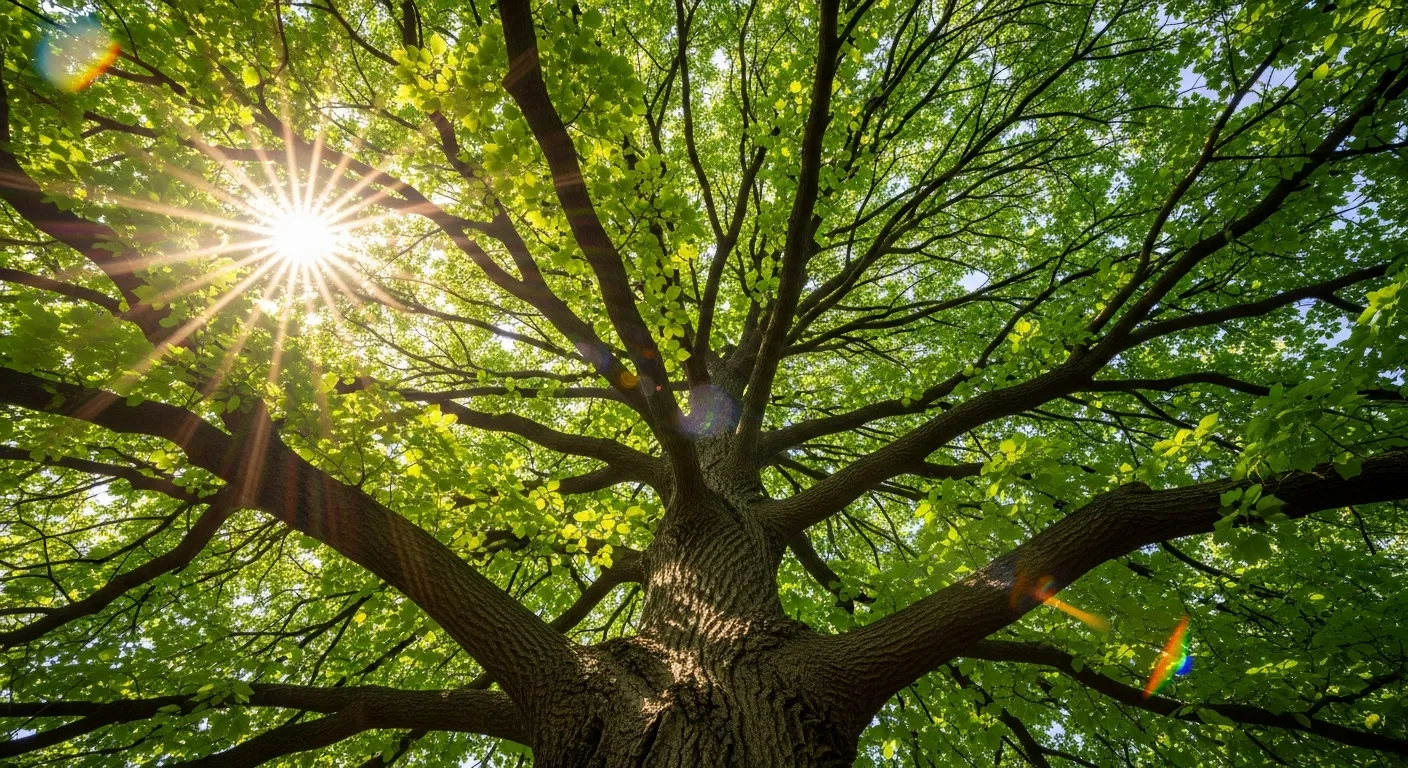
Mature trees have root systems that extend well beyond the drip line of the canopy, often two to three times the canopy radius. Construction activities, grade changes, and soil compaction within that zone can damage roots in ways that do not become visible for two to five years.
By the time the tree shows signs of stress, the damage is often irreversible.
Smart landscape design works with mature trees rather than around them. A few principles worth building into any outdoor project:
Critical root zones are non-negotiable. Any paving, grade change, or construction within the critical root zone, typically the area under the canopy and extending outward, should be reviewed by an arborist before work begins. Root barrier installation and permeable paving systems can help where hardscape is required.
Lighting placed at the base of mature trees dramatically improves evening kerb presence. Uplighting that illuminates the structure of a significant tree creates depth and visual interest that landscape lighting around shrubs and beds cannot replicate.
Specimen trees earn their footprint. A single mature live oak, beech, or magnolia can define the entire character of a property's landscape. Designing outdoor seating, pathways, or garden beds around a significant specimen, rather than cutting into its root zone, produces spaces that feel genuinely distinctive.
New plantings need to be sized for where they are going, not where they are now. A tree planted six feet from a foundation looks manageable as a sapling. At maturity, it becomes a structural and liability issue. Species selection and placement matter more than most homeowners give them credit for.
The Professional Services Worth Budgeting For
There is a meaningful difference between tree work a homeowner can handle and tree work that should always involve a licensed professional.
On the DIY Side: mulching around the root zone, watering during drought stress, monitoring for visible signs of disease or pest activity, and removing small dead branches within easy reach from the ground.
On the Professional Side: anything involving a chainsaw above shoulder height, removal of trees within fall distance of a structure or utility line, cabling and bracing work for co-dominant trunks, deep root fertilisation, and diagnosis of disease or structural issues.
The risk calculation on DIY tree work is straightforward. The tasks are manageable until they go wrong, and when they go wrong, the results are serious.
For property owners managing multiple trees, an annual professional inspection is one of the most cost-effective landscape investments available. Catching a structural issue early, before a storm converts it into an emergency removal, is consistently cheaper than addressing it after the fact.
A trained arborist can also identify disease and pest issues while they are still treatable, rather than when the tree has already declined past recovery.
What to Look for in a Tree Service Company?
Before hiring, ask these questions:
- Are the crew members ISA-certified arborists?
- Does the company carry liability insurance and workers' compensation?
- Do they provide a written assessment before work begins?
- Will they explain the reasoning behind recommended work rather than simply presenting a list of services?
A company that can answer those questions clearly and without hesitation is operating at a professional level. One that cannot should not be working on your property.
Sustainable Tree Care in the Modern Landscape
The conversation around outdoor design has shifted meaningfully in the past few years. Sustainability, biodiversity, and water efficiency have moved from niche interests to mainstream expectations, particularly among buyers in the upper market segments.
Trees are central to that shift. A well-managed canopy provides natural cooling that reduces HVAC demand in summer, acts as a windbreak that cuts heating costs in winter, and sequesters carbon while supporting local pollinator populations.
For homeowners redesigning their landscapes, a few approaches worth considering:
Native species selection. Native trees require less water, are resistant to local pest and disease pressures, and support local wildlife in ways that ornamental species often cannot. The landscape design community has made significant progress developing planting palettes that are both ecologically sound and visually compelling.
Understory planting beneath the existing canopy. Bare soil beneath mature trees is both ecologically and aesthetically underperforming. A layered understory of native shrubs, groundcovers, and shade-tolerant perennials creates a more complete landscape while reducing maintenance load.
Mulch, not grass, at the base. Turfgrass competes with tree roots for water and nutrients, and mowing equipment frequently damages surface roots. A mulched area extending to the drip line dramatically improves root zone conditions while reducing maintenance requirements.
Homeowners rethinking their broader lawn strategy will find that low-maintenance landscaping options for open yard areas can work alongside a well-managed tree canopy rather than against it.
The Long Game in Landscape Investment
The best-maintained properties in any market share a quality that is easy to describe and surprisingly rare in practice: they feel looked after.
Trees are one of the clearest signals of that. A property with a well-managed canopy, clean lines, and mature specimens in good health communicates a history of care that a coat of fresh paint on the exterior simply cannot.
It also communicates something forward-looking. Whoever has lived here has been thinking about the property's future, not just its present appearance.
For homeowners, that orientation is the most valuable thing strategic tree care delivers. Not just a cleaner yard or a better inspection report, though it delivers both. It delivers a property that has genuinely been built up over time, and that reads that way to everyone who walks through the gate.